

Search
105 results found for "Sheila Zagula"


Part 4: Feelings, Perspective Taking, Theory of Mind, Empathy & Mr. Hatch!
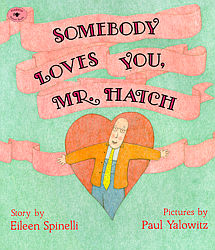 During National Autism Awareness Month, we have been using text and illustrations of the picture book Somebody Loves You, Mr. Hatch to enhance our teaching of feelings using the SGM heart icon, Feelings mini poster, and newly created maps. This is the final post of the Mr. Hatch series.
After completing these activities, older students may enjoy using the same Feelings template we began this blog with and a You Tube presentation of The Lost Thing by Shaun Tan. Click here to watch The Lost Thing...


“Each Kindness” For Valentine’s Day and Black History Month
 While in NYC about a year ago providing a workshop, Maryellen displayed a group of books to use with the Story Grammar Marker®. Three of the books were picture books and were written by Jacqueline Woodson. One of the participants came to Maryellen after the workshop to point out those books and especially the one entitled Each Kindness. The others on display were The Rope and The Other Side. Each Kindness is particularly well suited to this time of year with Valentine’s Day coming up and with the Celebration of Black History Month during February...


Maryellen Rooney Moreau Honored by Boise Peace Quilt Project
Making the world a better place for children. That’s what an Easthampton woman has done through her work in helping children solve problems. Maryellen Rooney Moreau is a speech and language pathologist. She was a professor at American International College and twenty years ago founded MindWing Concepts, a business that creates tools to help children communicate better to solve problems and resolve conflict. Maryellen says, “The tools that I’ve created over the past many years, 20 years, that I’ve been a speech and language pathologist for over 35 years, and the focus has always been to help children who maybe have ideas in their head, but can’t get the ideas out. So to foster that in areas of reading and writing, but especially in the area of social communication.”...


Spring Brings About a Whole New Setting!
 I can vividly remember trying to get my two young children up and ready for the day, gathering all needed belongings, buckling each into their car seat, driving to our daycare provider, and then rushing off to spend a day teaching kindergarten! Those were the days! Luckily for me, Michael and Mary were so cooperative and loved to go to their sitter. It was (some days!) actually fun! As spring got closer, we would play a game on the way to and from home looking for signs of spring. We had a song… Spring is coming, Spring is coming, How do you think I know? I saw a (the sign of spring said here, a pussy willow, a forsythia bush, a little robin, a daffodil, etc.) I know it must be so.


New Year Lesson: Recalling 2018 & Planning 2019 with Story Grammar Marker!
 Activities that allow us to reflect on the past are helpful in establishing habits of reviewing what we have done well, what we enjoyed, and what we would like to change. We have included some suggested activities that use the SGM icons to add to your toolbox. Ask students to recall one day from 2018 that they especially remember. Give the students an SGM Writing form or a Student Marker to plan their story. Give students time to fill in notes on the sheet and/or practice with the student marker and then, students could orally share their stories with one another...
Clifford’s Valentine’s Day Character Activity

 Norman Bridwell’s Clifford books are, of course, very popular with preschool and early elementary school-aged students. If you’re looking for a quick activity to reinforce the Character icon for Valentine’s Day for the younger set, pick up a copy of Clifford’s First Valentine’s Day or Clifford’s Valentines.


An Eric Carle Book Lesson on Character & Setting
 If you are looking for a quick lesson to review the Character and Setting icons with preschool and K students, check out the two versions of Do You Want To Be My Friend? by Eric Carle. In both versions, a mouse runs to many animals in search of a friend, asking, “Do you want to be my friend?” At the end of the story, he accomplishes his goal with an added surprise! For each animal the mouse asks, we are given a clue of seeing the animal’s tail and then the page turns to show the entire animal. The miniature version has text which follows the same format throughout…The mouse asks each animal, “Do you want to be my friend?”...


An 8-Step Lesson for Critical Thinking Featuring “Llama Llama”
 Llama Llama Mad At Mama by Anna Dewdney is an early elementary favorite. The lesson below is geared to ending first grade/second, but of course, can be changed/modified to meet your student needs. The Critical Thinking Triangle® In Action! tool has been a huge success with students in K-8. The Critical Thinking Triangle® (CTT) is the crux of the Story Grammar Marker® methodology for students when working through their problems, comprehending stories presented in academic settings, or when formulating and expressing personal narratives...


Old School “Brag Books” for Reinforcing Story Grammar Marker

I thought this would also be a great way to review SGM components, create centers for individuals and story specific centers, and/or send weekly tasks home to parents! With this in mind, I went on a hunt to find these albums, which are plastic, hold about 25 photos, and measure 4”x6”. In my day, we referred to them as “brag books” and would have them filled with recent photos of children, dogs, garden, etc., whatever we wanted to share (“brag about”) with family and friends! I found a few at our local dollar store and our CVS had a good number for about two dollars each. The following are a few examples of how I will be starting to use these along with MindWing’s STAMPede Stamp Set this year. This is a work in progress and one of which I am excited!...


Summer Story Activities with Dollar $tore Finds!
 A trip to a local dollar store is always an adventure for teachers as we keep an eye out for items to use in our classrooms. Today, I netted a package of 75 plastic multi-colored counting chips, an inch and a half in diameter. With summer approaching, I also found a child’s small sand pail. Back at my desk, I took out my set of MindWing's Icon STAMPede Rubber Stamp Set and stamped out a complete episode, one stamp per chip...


DIY Hands-On Activities For Narrative/Expository Text-Based Questions
 As I was reviewing blogs written last year at this time in May, I came across one (Magnetic Spinner Activity for Narrative Expository Text Questions) that used the Narrative/Expository Text-Based Question Cards from MindWing’s The “Core” of the Core manual (pages 171-182). This manual is chock-full of ideas for classroom use, both whole group and small group instruction. These narrative and expository questions may be used for both fiction and nonfiction. All you have to do is print them, laminate, and cut… then choose the ones which reinforce your student goals. The questions are easily paired with your current reading selections and with SGM maps. You may also add your own questions, modified for your students, but the ones presented will certainly get you started!...


Character & Setting Lesson: Make Your Own Page of a “Lift-the-Flap” Book
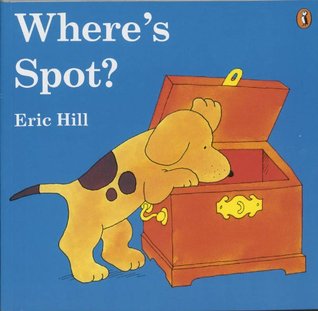 If you’re looking for a entertaining, summertime activity to do with preschoolers or kindergarten students, get a copy of the book Where’s Spot? by Eric Hill. This book was originally published in 1980 and was the first book in the Spot series. This engaging lift–the-flap book will bring you and your students on Sally’s journey to find her pup, Spot, in the house so that he will eat his supper. It’s the perfect book to reinforce the Descriptive Sequence and focus on the Character and Setting icons using Braidy the StoryBraid After reading (or viewing on YouTube) the book, make a list of characters (Sally, Spot, bear, snake, hippo, bird, lion, monkey, alligator, penguin, turtle) with the students...


Elephants Get the Hiccups?! Fun Lesson Teaching Kick-Offs and Compare/Contrast
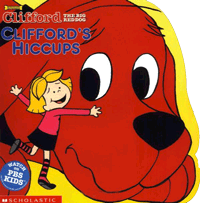
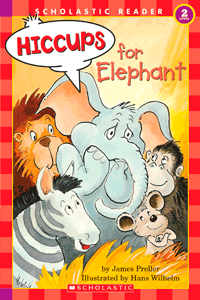
Recently, I came across two books at my local library that both had the same Kick-Off: Hiccups for Elephant by James Preller and Clifford’s Hiccups adapted by Suzanne Weyn. In each, the main Character in the story has the hiccups. Maryellen Moreau has completed a workshop activity using the Preller book shown below. In the Hiccups for Elephant book, the hiccups that the elephant has is an Initiating Event (Kick-Off) for the animals in the forest who do not like being awakened by the hiccups, and each have a remedy to offer. The elephant, himself, is not seeking a remedy...


Recognizing Feelings: Recycle Your Iced Tea Containers for a Cool Summer Activity
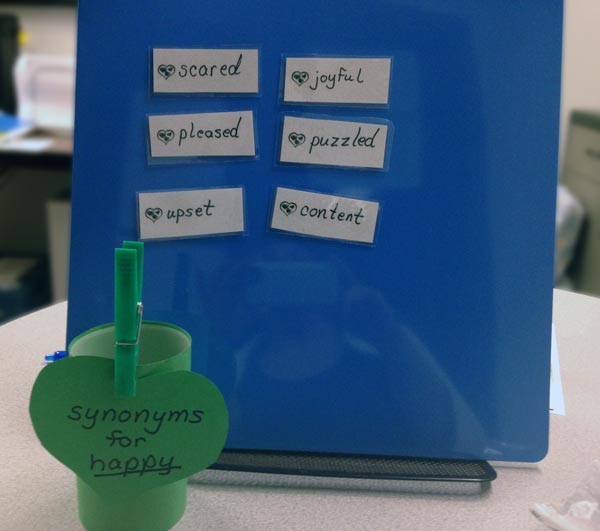 As you sip your iced tea on a hot summer day over the next couple of months, think about saving your iced tea containers for this very cool lesson and activity. It focuses on explicitly teaching how to recognize feelings and emotions in literature and in life. The explicit teaching of recognizing feelings in literature and in our interactions with others is imperative in our schools and in life. The above standards and quotes emphasize the importance of our need to help students identify feelings, recognize them in others, and make the connection to critical thinking and inference via the Critical Thinking Triangle. The SGM iconic structure is a concrete way to develop this necessity...


Five Favorite Books and Downloadable for Earth Day
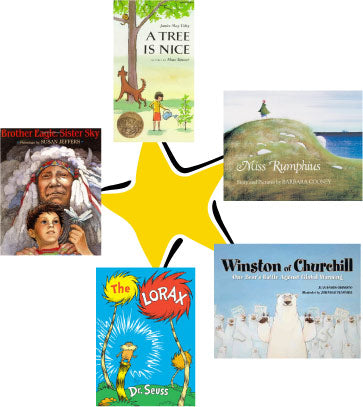 Earth Day is Friday, April 22, 2016! We have chosen five of our favorite book titles for this day to share with you. Clicking on any of the titles will take you to a description found on Amazon.
Also, please enjoy this Free Downloadable for your students to use to reinforce the SGM® Setting icon and Earth Day!
Create a bulletin board of ideas entitled… The Setting, Our Earth is Ours to Care For!...


Spring Stories — The Legend of The Indian Paintbrush
 The Legend of The Indian Paintbrush (Legends Series) by Tomie dePaola
 The Legend of The Indian Paintbrush (Legends Series) by Tomie dePaola
The following synopsis is taken from Goodreads
In spring, the hills and meadows of Texas and Wyoming are ablaze with the reds, oranges, and yellows of the Indian Paintbrush. How this striking plant received its name is told in an old Indian legend. Many years ago, when the People traveled the Plains, a young Indian boy had a Dream-Vision in which it was revealed that one day he would create a painting that was as pure as the colors of the evening sky at sunset. The boy grew up to become the painter of the tribe, but although he found a pure white buckskin for a canvas and made paints from the brightest flowers and the reddest berries, he could not capture the sunset...


Reading Lessons and Blogs About the Winter Season
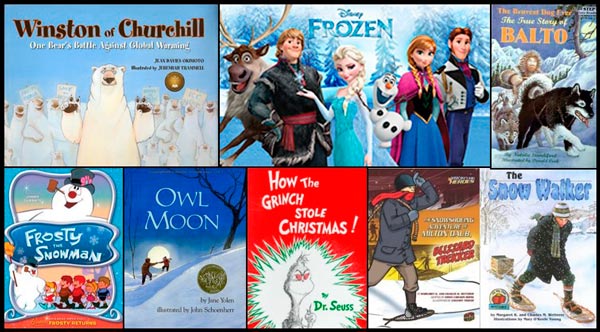 We recently posted a blog using the SGM® Setting Map with the four seasons:
With the official first day of the winter season right around the corner, check out some of these blogs and lessons that you may want to use with your students!


Winter’s Coming! Narrative/Expository Setting Lesson

Read several poems or books of your choice about the four seasons to the children. After reading, hold a brief discussion with the students about what they like about a particular season.
Have the children break into four groups. Using chart paper, label one for each season next to the setting icon. Ask the groups to rotate from one “season” to another and brainstorm all the words that the particular season makes them think of. Have one student be the recorder for each group and have each group use a different color maker...


Teaching SGM® Components — continued 2
 Back by popular demand: Use this new story to review the SGM components in a group or to sharpen student awareness of narrative structure.
- Read the story below to the child. (download printed version).
- Review the SGM® components on the SGM® Teacher Marker.
- Have the students draw or stamp the icons above the correct SGM® component. Note that the story is a complete episode, the first paragraph having the character, setting, initiating event, feeling and plan stated; the second paragraph containing all the planned attempts to carry out the plan; and the last paragraph having the direct consequence (tie-up) and resolution (feeling about how the story ended). We have found it helpful to go paragraph by paragraph. (See completed version)
- Using the Teacher Marker, model retelling the story to the children.
- After the activity is completed, have the student(s) work with a partner, Turn and Talk, and use his/her SGM® Student Marker to retell the story.


St. Patrick’s Day Lesson on Settings: “The Leprechaun’s Gold”
 On a recent visit to Springfield’s Sixteen Acres Library, I was pleased to see a large display of books related to St. Patrick’s Day. One that caught my eye is The Leprechaun’s Gold written by Pamela Duncan Edwards and illustrated by Henry Cole. After reading The Leprechaun’s Gold, I immediately thought that this would make a great lesson to focus on how a change in the Setting signified a new episode, and how all three of the settings and episodes in this picture book overlap, as so often happens in chapter books. There are so many other aspects to this book also, such as character interactions and comparisons, and developing skills in identifying character traits. The book also lends itself to a quick project using a shamrock cut-out...


Valentine’s Day Activities With Llama Llama and Gilroy Goat
 Valentine’s Day was always one of the most enjoyable days for students when I taught kindergarten, and Anna Dewdney’s Llama Llama books were popular with this age group. Llama Llama Be My Valentine! is a Penguin Young Reader book based on an episode of Llama Llama’s animated Netflix television series. Below are some of the ways I used this selection recently with groups of kindergarten and first graders of varying skill levels. Modify as you wish, depending on your goals/objectives and students...


St. Patrick’s Day Books, Lessons & Resources!
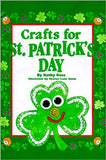
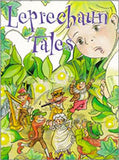 St. Patrick’s Day is fast approaching! We have three terrific resources already on our website and here are two other titles to add to the fun of this upcoming special day. Leprechaun Tales is a delightful collection of six short leprechaun tales retold by Yvonne Carroll. It would be fun to start each day off next week reading one to your students. They lend themselves to retelling with the SGM. This book provides an easy way to review a complete episode. If you are looking for simple crafts for students to do, Crafts for St. Patrick’s Day is the book for you! There is a brief introduction about St. Patrick’s Day by the author and followed by twenty craft projects...


6 Books and Activity for Groundhog Day
 February 2nd was always a pleasant day when I taught kindergarten. After exploring groundhogs, we were ready for Groundhog Day! It was always an enjoyable break from our daily routine, especially during the long winter months here in New England. During a recent trip to our local library in Springfield, MA, I was reminded of this time and checked out a few books to share with you. We can always count on Gail Gibbon’s books to inform students in an entertaining way. So it is with Groundhog Day. The book gives information on the celebration itself, groundhogs, and includes additional “Groundhog Facts”...


Using Data Collection and Collaboration to Enhance Instruction
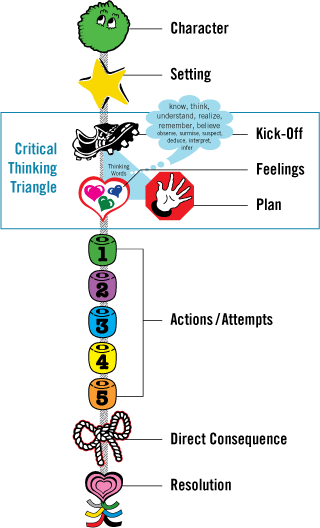 The icons and maps of the Story Grammar Marker®, Braidy®, and ThemeMaker® make abstract concepts of text structure visible and concrete for students. The use of the developmental stages of narrative development (shown below) enables you to differentiate instruction within your classroom. In schools I have worked, one such way we implemented SGM® methodology to support instruction was to establish grade level group writing conferencing sessions three formal times a year...


Back to School Idea: Summer Memories
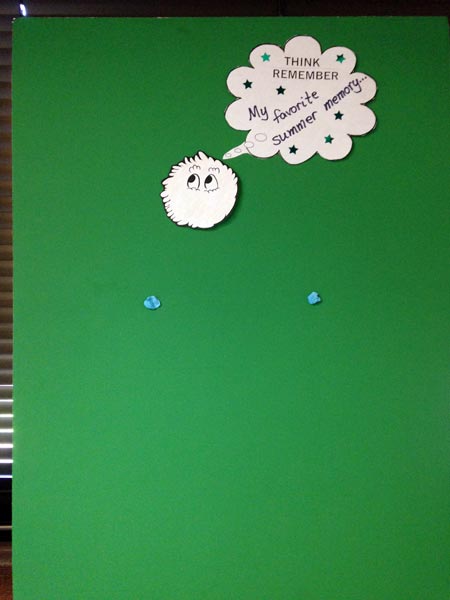 Getting students back in the swing of a new school year can be a challenge. Here is an idea to help make this transition easier. Ask the students what their favorite summer memory is… Have them think about where they were (Setting) and what they did there. To help facilitate the sharing of these ideas students may use the SGM® resources as shown below. Invite students to orally share these memories with the group. I used a removable adhesive tape so that I could display student work on the poster board as they orally shared memories. This lends itself especially well to teachers/interventionists/therapists who travel from class to class and who work with multiple grade levels...


Magnetic Spinner Activity for Narrative & Expository Text Questions
 In today’s classrooms, students are being asked to comprehend more complex materials in earlier grades with a particular emphasis on expository texts. The blending of both narrative and expository texts in many reading selections make understanding these structures a cornerstone for student comprehension success. The iconic structure of the SGM® provides a concrete visual and tactile scaffold to teach these structures to children. The expository text structures “tie in” to the narrative sequence. The “Core” of the Core manual explains this connection in detail showing how each narrative stage facilitates thinking about information (expository) structures.


Additional Activities for “The River”
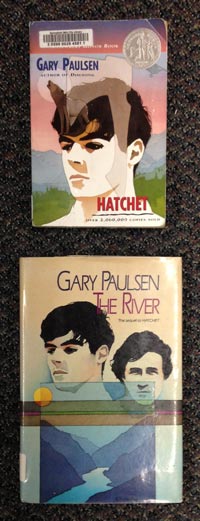 For those of you who own a copy of the ThemeMaker Teachers' Manual, you know that one of the novels featured is The River by Gary Paulsen. This novel is a sequel to Hatchet. The River is an excellent book for exploring character development. I recently came across my folder for The River and thought I would share a few additional activities with you before putting it away. One of our sixth grade teachers, Donna Mulligan and I collaborated to present this reading adventure to our students. Six students in her class were on educational plans for reading, two for decoding and comprehension, the others for comprehension skills only. Since all the students had knowledge of and had used the SGM® for several years, it provided the needed scaffolding to support students within the classroom. This also made it easier for flexible groupings of students as the SGM® was so familiar to all and a common language was already established among all participants...


Kindergarten and First Grade Setting: Bear Feels Scared
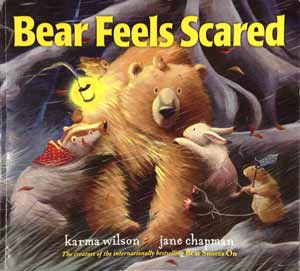 Another story that I frequently used in kindergarten and first grade for development of the concept of the Setting was Bear Feels Scared by Karma Wilson. As always, read the book for enjoyment with the children. Then, choose any of the following ideas and modify them to meet the needs of your students. 1. Elicit words from the students to describe the setting of the woods. The text and illustrations will give plenty of ideas. Use the SGM Magnets as shown at right, creating an expository list map. 2. A simple project—easy for you to create—to further form this connection between the SGM icon and “Setting” term is shown below. Students may copy words from the list or you might want to have them written out for them, depending on the child(ren). The star icon is found on page 140 of the Braidy the StoryBraid manual...


Autism Awareness & SGM®: 31 FREE RESOURCES
In recognition of Autism Awareness Month, we would like to share with you 31 Blog Posts, Free Lessons, Webinars and Videos that focus on social communication which can be used to help children along the Autism Spectrum. The themes in these blogs/lessons/videos/webinars are perspective-taking, social problem solving, critical 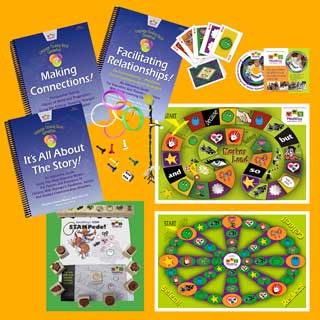 thinking, social emotions, theory of mind, story-telling and more! In addition to these FREE resources, for the month of April our Autism/Social Communication Collection is $50 OFF! The sale price is $99.95 for the whole collection (normally $149.95)! We want to give you the chance to use this kit of materials with the population of students who can benefit from it most...


A Leprechaun Lesson for St. Patrick’s Day with Story Grammar Marker®
Cead Mile Failte (A Hundred Thousand Welcomes)!
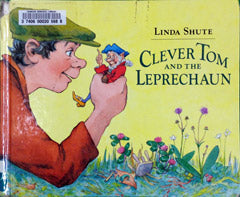
I always enjoy trickster tales and have been amazed at the discussion and enthusiasm that these tales elicit from children. The tales from this folktale genre exists worldwide. So, with this in mind and St. Patrick’s Day on the horizon, I thought it would be fun to look at books involving leprechauns, those mischievous fairies from Irish folklore. A brief trip to my local library in Springfield, Massachusetts, netted many books sure to put a smile on your student’s face! One such tale is Clever Tom and the Leprechaun. Here is a link to a YouTube video of a reading of the book. I would begin by reviewing two words in the title: clever and leprechaun...


Early Elementary Idea to Reinforce Character, Feelings, List and Sequence
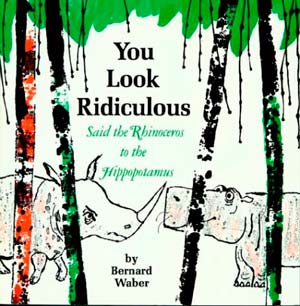 Children’s book author and Illustrator, Bernard Waber created many books for children including the Lyle the Crocodile series and Ira Sleeps Over. Another book, You Look Ridiculous Said the Rhinoceros to the Hippopotamus, is an old favorite that lends itself very well to introducing/reinforcing the SGM®/Braidy® List Map.
In this story, the hippopotamus is told by a series of other jungle animals that she looks ridiculous. Each animal then tells the hippopotamus that she needs features that he/she possess (examples include the leopard telling the hippo she needs spots and the giraffe telling the hippo she needs a long neck)...


Teaching SGM® Components
 Are you looking for a story to review the SGM® components in a group or to sharpen student awareness of narrative structure?
1. Read the story below to the child (download printed version).
2. Review the SGM® components on your Teacher Marker.
3. Have the students draw or stamp the icons above the correct SGM component.
4. Have the students draw or stamp the icons above the correct SGM® component (see completed version)
5. After the activity is completed, have the student work with a partner, Turn and Talk, and use his/her SGM® Student Marker to retell the story...
Braidy’s Bag
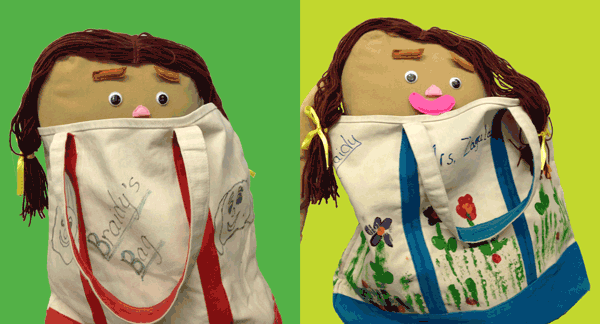 Do you travel from classroom to classroom teaching Braidy the StoryBraid lessons? Canvas tote bags are very helpful! You can fit Braidy and all the accessories plus the books/activities needed for your lessons in the bag. One teacher used large plastic envelopes and put the book and activity for each class in separate envelopes. Everything fits nicely into the bag. Shown are two of my “Braidy Bags.” The bag shown at the right was made by my kindergarten students. Each child had a part in the “creation” of this bag using his/her thumbprint and paint as part of the design...
Enjoy Using the Story Grammar Marker® Materials For Traditional and Graphical Stories
Our winter theme is expanding in literature as well as in real life here in New England. From blogs containing twelve episodes of Frozen to Owl Moon to the recent Blizzards of 2015, we have chosen two versions of the same story reflecting a winter theme.
The Snow Walker
(On My Own History)
By Margaret K. Wetterer and Charles M. Wetterer (Authors)
Mary O'Keefe Young (Illustrator)
Carolrhoda Books (Lerner)
Minneapolis, MN: 1996
ISBN: 978-0876149591
The Snowshoeing Adventure of Milton Daub, Blizzard Trekker
(History's Kid Heroes)
By Margaret K. Wetterer and Charles M. Wetterer (Authors)
Emma Carlson Berne (Adapter), Zachary Trover (Illustrator)
Graphic Universe (Lerner)
Minneapolis, MN: 2010
ISBN: 978-0761361947
Our Cat Flossie
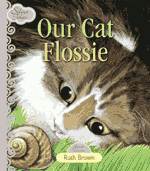
Read the book to the students. Review the character map and the categories with the children. Reread Flossie to the children having them listen to details to use on the Character Map. Pair the children and give them the Character Map to complete. Have them write the character’s name under the character icon.
With the students participating, complete the Character Map with the class showing the pictures and/or reading the text that relate to the each section of the map. This book lends itself very well to this activity as the text is simple and illustrations are wonderful. We have used this activity with students in K-3, modified according to the needs of the grade level.
Below are two samples from second grade students.


Two Summer Books (and More) with Feelings!
 As a former teacher of 38 years, I know summer is a time for educators to catch some much-needed R&R with family and friends. It is also a time to reflect on the past school year; what we thought went well and what changes we can make in the upcoming school year to improve student learning. I am always on the lookout for new books/materials to add to my lessons and recently came across two books that may interest you...


“Maniac Magee”: Exploring Character & Setting in Novels (with FREE Downloadables)
 One of the novels that we explored in sixth grade was Maniac Magee by Jerry Spinelli. Our focus varied, depending on our students, and my task was always to provide the scaffolding using the SGM® for classroom presentations—making the lessons accessible to all our students, including those with IEPs. Our elementary school used Braidy®/SGM® at all grade levels so that by the time students were in upper elementary, they were well-versed in using the icons for both narrative and expository texts. The beauty of the SGM®, however, is that the icons are easily learned and students can successfully participate in lessons in a few introductory sessions...


“New Year” Lesson Idea with 3 Books and 1 FREE Worksheet


My father always told us to begin our essays with a clear definition of the topic. Thus, a promise to do something differently in the new year defines what many of us will be thinking of as 2018 rolls in! Several years ago, we presented a blog, “SGM is 25 Years Old & New Year’s Resolution Worksheet,” with a free downloadable for your classroom use. The worksheet, which would make an enjoyable group book for your classroom or with a few added touches, a bulletin board, has been updated and is available at right, modify as you wish...


Do-It-Yourself Ringed Cards for Teaching Beginning, Middle, End & Story Development
 Recently, I saw a clever sound blending idea on Pinterest using rings and small cards. It reminded me of our very popular blog using popsicle sticks to teach story elements using the Story Grammar Marker®. With these thoughts in mind, here are two ideas that are simple to make and easy to transport from one site to another making them ideal for teachers/


6 Attempts to Friend “Dear Mr. Leprechaun”
 To Maryellen: “Wishing you good luck and true friendship forever!” This was the inscription that author Martin Nelson Burton wrote in November 2004, on Maryellen’s copy of Dear Mr. Leprechaun, Letters From My First Friendship. This is a delightful, true tale based upon the author’s childhood writings to his leprechaun friend. The original letters and the responses (written by the author’s father, aka The Leprechaun) are presented in the book. On each page, there is a leprechaun that younger children will enjoy searching for. The beautiful artwork of Clint Hansen was created with paper sculpture. The last page of the book gives a brief description of the sculpture process that children and adults will find fascinating...


DIY SGM® Icon Stickers for Reinforcing Parts of the Story

 Are you looking for a way to reinforce SGM icons with students in your small groups? Using the stamps from our Icon Stampede Stamp Activity Set and Post-It Filing Tabs, create a set of icons as shown below. I picked up a clipboard to store them in order. Notice how the set of Post-It notes are green, yellow, and red to correspond to the beginning, middle, and end of a story. Various sizes are available; you may also decide to cut the larger ones in half, depending on your needs. I like the 2 inch by 1½ inch size, as I found them easy to remove...


6 Ideas for Perspective-Taking, Character Traits & Conflict Using “Wonder” by R.J. Palacio
 My daughter’s book club chose “Wonder” by R.J. Palacio and she recommended it to me. This is a book that would support discussions centering on feelings, living in a community and what it means, developing empathy towards others, and the acceptance of differences, to name a few. The format of the book definitely lends itself to teaching perspective taking. There are many ways to approach this book within classrooms or therapy settings. Of course, the deciding factor would be the goals and objectives for your particular students...


Penguins: The COOL Topic For Narrative and Expository Text!
 A recent posting shared on MindWing’s Facebook page (http://tinyurl.com/pierrewhitneyslp) showed a fantastic SGM® lesson by Whitney Chitty Smith of “Let’s Talk with WhitneySLP,” related to the book, Pierre the Penguin, A True Story, written by Jean Marzollo and illustrated by Laura Regan. After viewing this terrific post (Thank You, Whitney!), I immediately went to the top drawer of my desk and pulled out the book. I had started a blog entry for this book back in November and had never completed it!...


Brrr...Winter is here!
With snow predicted in many locations and some areas already under a blanket of snow, check out our very popular blog post from last year: Reading Lessons and Blogs About the Winter Season.
Stay warm!


Reinforcing The Critical Thinking Triangle in a Chapter Book
 Students and I were recently discussing if anyone could really be “perfect.” I was reminded of Be A Perfect Person In Just Three Days! by Stephen Manes. This book was originally published in 1982 and remained a favorite read aloud of mine for many years. As I began to use the Story Grammar Marker®, this selection provided a concrete example of using the SGM® with a chapter book. It is the perfect match for a Complete Episode. From the very obvious Kick-Off to the lesson learned at the end, the book was an entertaining, fun read-aloud for students in grades 3 and 4. We have outlined the book as a Complete Episode— expand on it as you wish. Each Attempt could also be mapped out as a Complete Episode...


Write a Response!
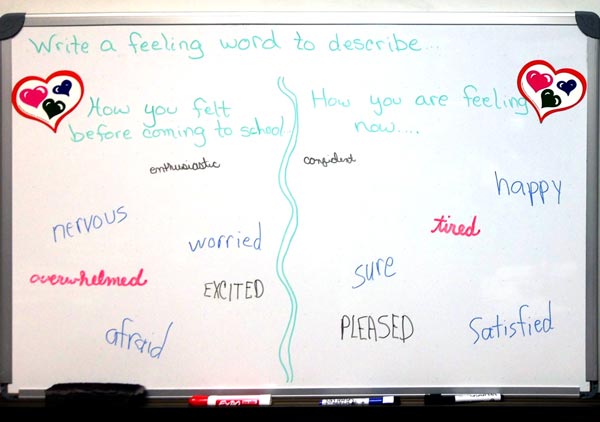 Writing a question or statement on a whiteboard and having students respond during the school day is becoming increasingly popular. It can be used as way to check in with students about a current topic and initiate discussion. Shown is one way to bring in the SGM® icons. Put this board in view after lunch on the first day of school. You may also post the SGM® Feelings Poster. Ask the students to write one word to describe how they were feeling before coming to school and one to describe how they currently are feeling...


Story Grammar Marker Summer Reading List
 As I was inside during a recent heat wave here in Massachusetts, I decided to review our new Blog Index on our MindWing Concepts website. There is such wonderful information available free of charge —lessons, webinars, downloadable files and technology resources to use in combination with this developmental tool! If you are new to SGM or experienced in our methodology, take some time from your summer to browse through our blog pages. Since I was looking for resources today to use with a student for lessons involving the Complete Episode, I thought I would share these 10 with you...


Kindergarten Activity: In the Tall, Tall Grass
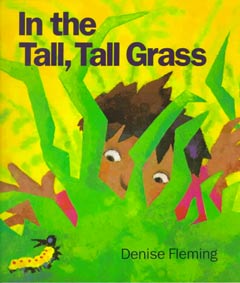 In the Tall, Tall Grass by Denise Fleming has always been a favorite of mine to use with kindergarten students. It follows the perspective of a caterpillar on a journey in the tall, tall grass. I found it especially helpful to reinforce the Action Sequence, Stage 2, of narrative language development, shown below from Braidy the StoryBraid manual. The pictures below show a center activity that proved very popular with the students. The icon templates were obtained from pages 140-141 of the Braidy the StoryBraid manual. 1. I made a pocket folder for all the materials to be stored in out of green construction paper, folding it in half and cutting the “grass” along one end. 2. I cut out the star icon from page 140 of the manual...