

Search
105 results found for "Sheila Zagula"


Using Data Collection and Collaboration to Enhance Instruction
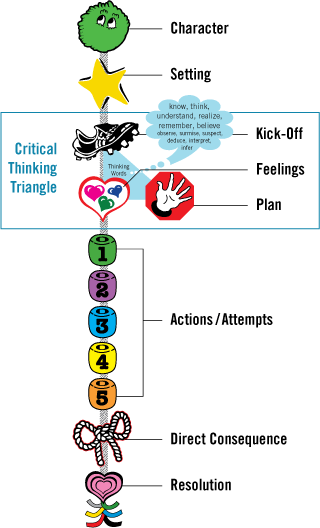 The icons and maps of the Story Grammar Marker®, Braidy®, and ThemeMaker® make abstract concepts of text structure visible and concrete for students. The use of the developmental stages of narrative development (shown below) enables you to differentiate instruction within your classroom. In schools I have worked, one such way we implemented SGM® methodology to support instruction was to establish grade level group writing conferencing sessions three formal times a year...


Write a Response!
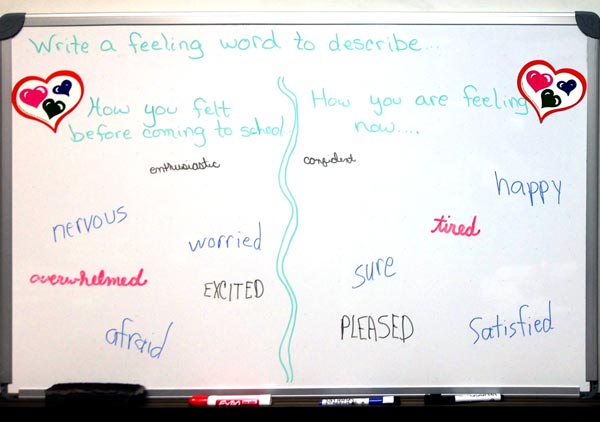 Writing a question or statement on a whiteboard and having students respond during the school day is becoming increasingly popular. It can be used as way to check in with students about a current topic and initiate discussion. Shown is one way to bring in the SGM® icons. Put this board in view after lunch on the first day of school. You may also post the SGM® Feelings Poster. Ask the students to write one word to describe how they were feeling before coming to school and one to describe how they currently are feeling...


Back to School Idea: Summer Memories
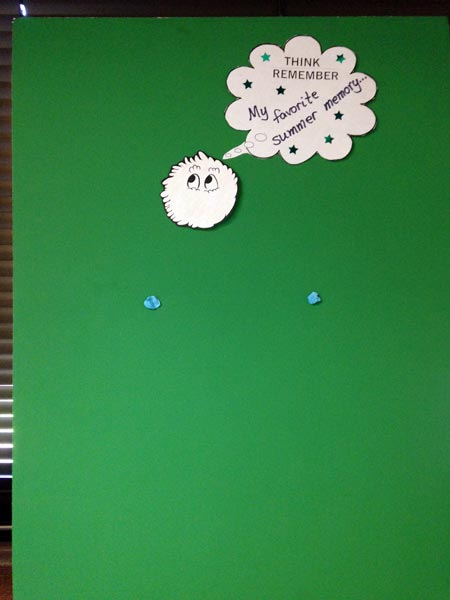 Getting students back in the swing of a new school year can be a challenge. Here is an idea to help make this transition easier. Ask the students what their favorite summer memory is… Have them think about where they were (Setting) and what they did there. To help facilitate the sharing of these ideas students may use the SGM® resources as shown below. Invite students to orally share these memories with the group. I used a removable adhesive tape so that I could display student work on the poster board as they orally shared memories. This lends itself especially well to teachers/interventionists/therapists who travel from class to class and who work with multiple grade levels...


SGM Summer Reading List: Part 3, Setting
 I hope you have been able to browse through our recent blogs: SGM Summer Reading List, Part 1 (Complete Episode) and Part 2 (Character). We have received several comments from people who thought both were so beneficial in demonstrating the depth of the Story Grammar Marker®. The SGM® is based upon research showing that strengthening oral narrative discourse skills improves comprehension and writing competency. Today’s blog features past selections with the focus on the SETTING...


“Getting to Know You” Activity for the New School Year
 It’s never too early to begin planning for a new school year. I know that my colleagues and I were always preparing our classrooms and sharing ideas all summer long! Here is a simple idea for the first day of school to use with students. This activity may be modified to meet the needs of your students. You can use MindWing’s Icon STAMPede Stamp Activity Set to print the paper. (You can use the other stamps for activities to reinforce the Setting, Kick-Off, Feelings, etc.) 1. Review the SGM icons. Talk about the Character icon. 2. Print as many character icons as needed, two of each color. 3. Laminate and cut the icons out. (These may be used all year to group students for other activities as well and are easily stored to be used with your groups!)...


SGM Summer Reading List - Part 2
We received many positive comments about our blog last week, Story Grammar Marker Summer Reading List, which featured ten resources focusing on the Complete Episode. This week, we have included eight previous blogs that focus on the concept of Character. Please review them all, as they span across multiple grade levels. This sampling of Character blogs demonstrates the versatility of the SGM! There are many more resources to support the use of our SGM tools available free of charge on our MindWing website...


Story Grammar Marker Summer Reading List
 As I was inside during a recent heat wave here in Massachusetts, I decided to review our new Blog Index on our MindWing Concepts website. There is such wonderful information available free of charge —lessons, webinars, downloadable files and technology resources to use in combination with this developmental tool! If you are new to SGM or experienced in our methodology, take some time from your summer to browse through our blog pages. Since I was looking for resources today to use with a student for lessons involving the Complete Episode, I thought I would share these 10 with you...


Character & Setting Lesson: Make Your Own Page of a “Lift-the-Flap” Book
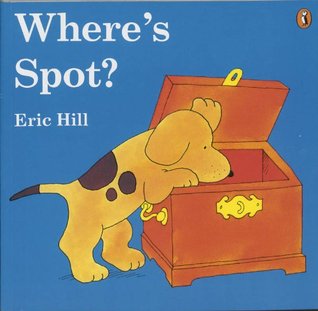 If you’re looking for a entertaining, summertime activity to do with preschoolers or kindergarten students, get a copy of the book Where’s Spot? by Eric Hill. This book was originally published in 1980 and was the first book in the Spot series. This engaging lift–the-flap book will bring you and your students on Sally’s journey to find her pup, Spot, in the house so that he will eat his supper. It’s the perfect book to reinforce the Descriptive Sequence and focus on the Character and Setting icons using Braidy the StoryBraid After reading (or viewing on YouTube) the book, make a list of characters (Sally, Spot, bear, snake, hippo, bird, lion, monkey, alligator, penguin, turtle) with the students...


Elephants Get the Hiccups?! Fun Lesson Teaching Kick-Offs and Compare/Contrast
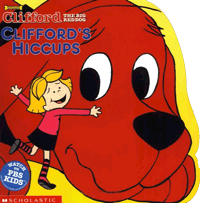
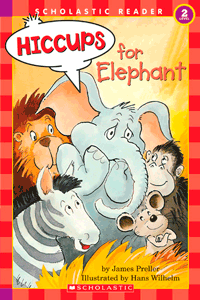
Recently, I came across two books at my local library that both had the same Kick-Off: Hiccups for Elephant by James Preller and Clifford’s Hiccups adapted by Suzanne Weyn. In each, the main Character in the story has the hiccups. Maryellen Moreau has completed a workshop activity using the Preller book shown below. In the Hiccups for Elephant book, the hiccups that the elephant has is an Initiating Event (Kick-Off) for the animals in the forest who do not like being awakened by the hiccups, and each have a remedy to offer. The elephant, himself, is not seeking a remedy...


Organizing Your SGM Materials for the New School Year
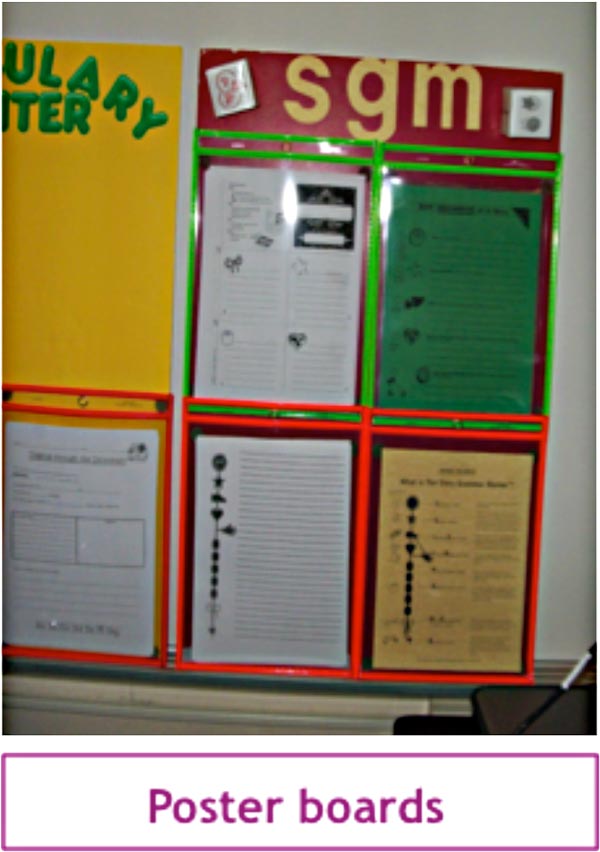 As another school year winds down, I am reminded of what I always loved about teaching: There was always another year to plan to engage children, change approaches, learn new techniques, and grow as a professional!
As you pack up supplies and begin a few weeks of rest, file this idea away with your materials to consider implementing next year. This picture is an idea that Natalia Kofman, a colleague of mine in Westfield, MA, used to organize her SGM® materials in her fourth grade classroom...


Recognizing Feelings: Recycle Your Iced Tea Containers for a Cool Summer Activity
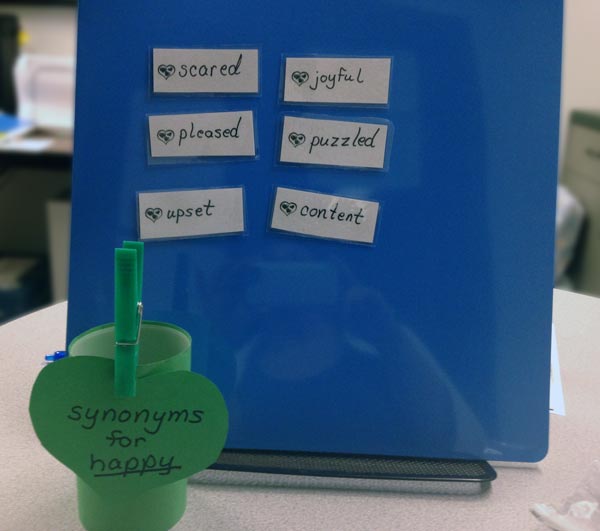 As you sip your iced tea on a hot summer day over the next couple of months, think about saving your iced tea containers for this very cool lesson and activity. It focuses on explicitly teaching how to recognize feelings and emotions in literature and in life. The explicit teaching of recognizing feelings in literature and in our interactions with others is imperative in our schools and in life. The above standards and quotes emphasize the importance of our need to help students identify feelings, recognize them in others, and make the connection to critical thinking and inference via the Critical Thinking Triangle. The SGM iconic structure is a concrete way to develop this necessity...


Activity for a Field Trip: Big Red Barn
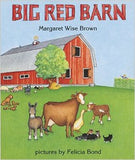 This time of the school year always reminds me of the many field trips I chaperoned while teaching kindergarten. The Zoo in Forest Park, Springfield, MA, was always a favorite, with a train ride around the park as our closing activity. We were fortunate to also have a beautiful park close by to our school, Stanley Park in Westfield, MA; a popular mini-trip within walking distance. The activity I am sharing today is one of 70 mini-lessons presented in the Braidy the StoryBraid® manual that we used when preparing for a farm trip to The Gran-Val Scoop in Granville, MA. As the name implies, the children were able to have a special treat of dairy-farm-made ice cream! Also included is a follow-up activity that we did on our return and a suggested extension activity...


Analyze 5th Grade Writing
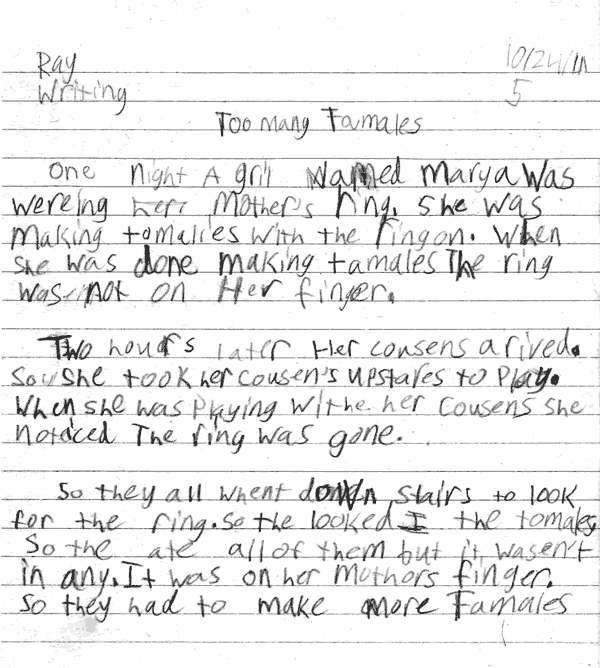 Recent blogs showed Maryellen’s analysis of a third-grade written retelling of Too Many Tamales. Included in those blogs is a copy of the actual sample, a typed version of the sample, an analysis, and conferencing suggestions to use during the Writing Process. In this new blog, we look at another sample of a written retelling of Too Many Tamales; this time from a fifth-grade student, Ray. We invite you to analyze his writing and at the end of this week, Maryellen will provide her analysis and talking points for conferencing.

Magnetic Spinner Activity for Narrative & Expository Text Questions
 In today’s classrooms, students are being asked to comprehend more complex materials in earlier grades with a particular emphasis on expository texts. The blending of both narrative and expository texts in many reading selections make understanding these structures a cornerstone for student comprehension success. The iconic structure of the SGM® provides a concrete visual and tactile scaffold to teach these structures to children. The expository text structures “tie in” to the narrative sequence. The “Core” of the Core manual explains this connection in detail showing how each narrative stage facilitates thinking about information (expository) structures.


Collaboration in the Classroom with Story Grammar Marker® & Big Al
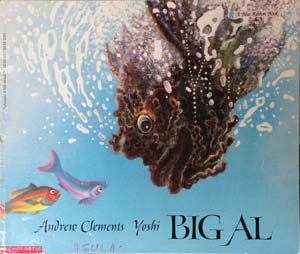
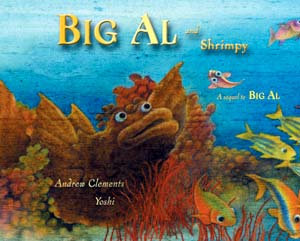 Big Al, written by Andrew Clements and illustrated by Yoshi, was always one of my key books when working collaboratively with teachers as we implemented the SGM in classroom settings. There was so much to do with this picture book including mapping the story out as a Complete Episode using the SGM® map, retelling the story with partners, doing a written retelling using the completed map, working on character description using the SGM® Character Map, sequencing of events in the story, and using sequence words for story cohesion. Students and teachers alike were delighted to learn that Clements and Yoshi had teamed up in 2002 for another book featuring Big Al…Big Al and Shrimpy. Both stories begin with the same wording which created a natural segue to compare/contrast activities...


Hands-On Activities for Beginning, Middle and End of a Story
 Asking students to tell or write a story with a beginning, middle, and end is a daunting task for most. Teaching the narrative structure in a developmental fashion using the SGM methodology is a powerful tool to instruct students in language, comprehension, and writing. The SGM® is an iconic-based tool that (developmentally) represents the necessary elements of story grammar and story organization. We have received a great deal of positive feedback on our post from March 29, 2016, Fun Activity to Reinforce the “Kick-Off” using the Kick-Off icon and the book The Doorbell Rang...


Lessons & Activities for Feelings and Reactions
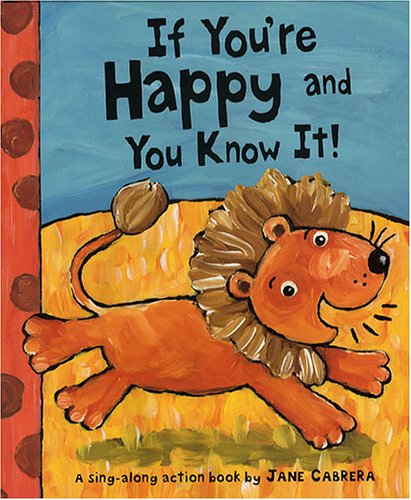 “If you’re happy and you know, clap your hands!” How many of us remember and still occasionally sing this old camp song? There are many versions of this song on YouTube that you could access as a jumping off point for a similar activity to the one described below or you may use books of your choosing if you cannot find the two books below in your local library. Read or sing If You’re Happy and You Know It by Jane Caberra to your students for enjoyment. Make a list of all the actions/activities mentioned in the book on the white board...


Five Favorite Books and Downloadable for Earth Day
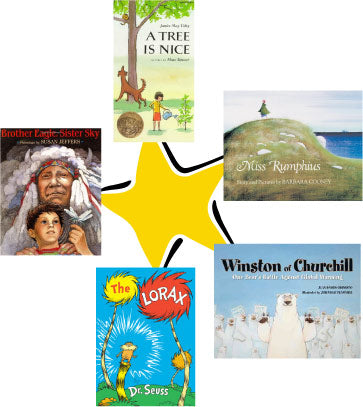 Earth Day is Friday, April 22, 2016! We have chosen five of our favorite book titles for this day to share with you. Clicking on any of the titles will take you to a description found on Amazon.
Also, please enjoy this Free Downloadable for your students to use to reinforce the SGM® Setting icon and Earth Day!
Create a bulletin board of ideas entitled… The Setting, Our Earth is Ours to Care For!...


Additional Activities for “The River”
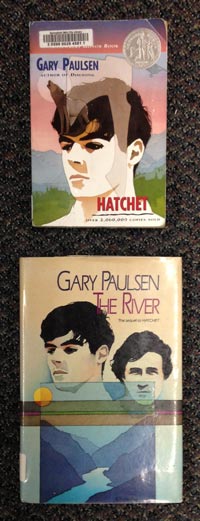 For those of you who own a copy of the ThemeMaker Teachers' Manual, you know that one of the novels featured is The River by Gary Paulsen. This novel is a sequel to Hatchet. The River is an excellent book for exploring character development. I recently came across my folder for The River and thought I would share a few additional activities with you before putting it away. One of our sixth grade teachers, Donna Mulligan and I collaborated to present this reading adventure to our students. Six students in her class were on educational plans for reading, two for decoding and comprehension, the others for comprehension skills only. Since all the students had knowledge of and had used the SGM® for several years, it provided the needed scaffolding to support students within the classroom. This also made it easier for flexible groupings of students as the SGM® was so familiar to all and a common language was already established among all participants...


Kindergarten and First Grade Setting: Bear Feels Scared
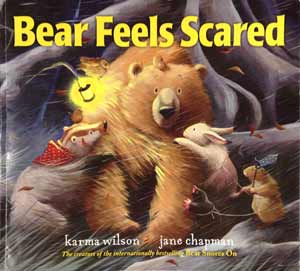 Another story that I frequently used in kindergarten and first grade for development of the concept of the Setting was Bear Feels Scared by Karma Wilson. As always, read the book for enjoyment with the children. Then, choose any of the following ideas and modify them to meet the needs of your students. 1. Elicit words from the students to describe the setting of the woods. The text and illustrations will give plenty of ideas. Use the SGM Magnets as shown at right, creating an expository list map. 2. A simple project—easy for you to create—to further form this connection between the SGM icon and “Setting” term is shown below. Students may copy words from the list or you might want to have them written out for them, depending on the child(ren). The star icon is found on page 140 of the Braidy the StoryBraid manual...


Autism Awareness & SGM®: 31 FREE RESOURCES
In recognition of Autism Awareness Month, we would like to share with you 31 Blog Posts, Free Lessons, Webinars and Videos that focus on social communication which can be used to help children along the Autism Spectrum. The themes in these blogs/lessons/videos/webinars are perspective-taking, social problem solving, critical 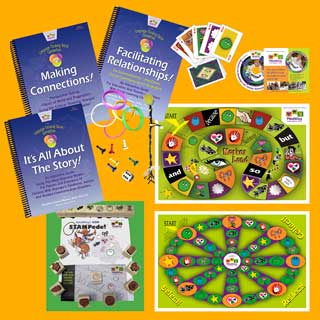 thinking, social emotions, theory of mind, story-telling and more! In addition to these FREE resources, for the month of April our Autism/Social Communication Collection is $50 OFF! The sale price is $99.95 for the whole collection (normally $149.95)! We want to give you the chance to use this kit of materials with the population of students who can benefit from it most...


Fun Activity to Reinforce the “Kick-Off”
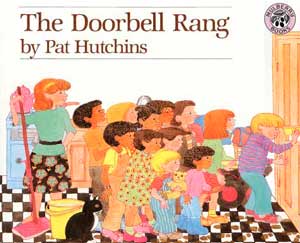
The Doorbell Rang by Pat Hutchins has been a popular book used to teach sharing and fractions in elementary school. If you are not familiar with the story, Ma bakes a batch of a dozen cookies to be shared by her two children. However, as they sit down to enjoy the treat, the doorbell begins to ring with friends dropping by. Each time, the cookies must be divided up to share! The ending is quite a surprise! We have found this book to be an excellent way to reinforce the Initiating Event or “Kick-Off” icon of a story, especially in first grade. All you will need is the book and a “Kick-Off” icon taped to the end of a Popsicle stick, one for each participant...


Kindergarten Activity: In the Tall, Tall Grass
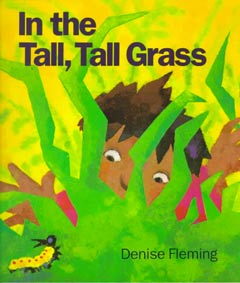 In the Tall, Tall Grass by Denise Fleming has always been a favorite of mine to use with kindergarten students. It follows the perspective of a caterpillar on a journey in the tall, tall grass. I found it especially helpful to reinforce the Action Sequence, Stage 2, of narrative language development, shown below from Braidy the StoryBraid manual. The pictures below show a center activity that proved very popular with the students. The icon templates were obtained from pages 140-141 of the Braidy the StoryBraid manual. 1. I made a pocket folder for all the materials to be stored in out of green construction paper, folding it in half and cutting the “grass” along one end. 2. I cut out the star icon from page 140 of the manual...


Spring Stories — The Legend of The Indian Paintbrush
 The Legend of The Indian Paintbrush (Legends Series) by Tomie dePaola
 The Legend of The Indian Paintbrush (Legends Series) by Tomie dePaola
The following synopsis is taken from Goodreads
In spring, the hills and meadows of Texas and Wyoming are ablaze with the reds, oranges, and yellows of the Indian Paintbrush. How this striking plant received its name is told in an old Indian legend. Many years ago, when the People traveled the Plains, a young Indian boy had a Dream-Vision in which it was revealed that one day he would create a painting that was as pure as the colors of the evening sky at sunset. The boy grew up to become the painter of the tribe, but although he found a pure white buckskin for a canvas and made paints from the brightest flowers and the reddest berries, he could not capture the sunset...


Another Classic: Dr. Seuss’ The Sneetches
 A previous blog (“Read Across America Day and Dr. Seuss Lesson,” 2/29/16) focused on the biography about Dr. Seuss. One of his selections mentioned was The Sneetches, published in 1961. Written during the 1960s during the civil rights struggle, this book demonstrates conflict between star-bellied Sneetches and those Sneetches who did not have stars. In a biography, it was stated that Ted Geisel showed through this story how he thought it was silly for people “to hate one another because they looked different” (p. 81, Who Was Dr. Seuss? by Janet Pascal). Below find The Sneetches outlined using five of the seven SGM Developmental Stages...


A Leprechaun Lesson for St. Patrick’s Day with Story Grammar Marker®
Cead Mile Failte (A Hundred Thousand Welcomes)!
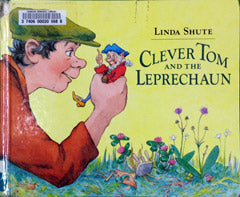
I always enjoy trickster tales and have been amazed at the discussion and enthusiasm that these tales elicit from children. The tales from this folktale genre exists worldwide. So, with this in mind and St. Patrick’s Day on the horizon, I thought it would be fun to look at books involving leprechauns, those mischievous fairies from Irish folklore. A brief trip to my local library in Springfield, Massachusetts, netted many books sure to put a smile on your student’s face! One such tale is Clever Tom and the Leprechaun. Here is a link to a YouTube video of a reading of the book. I would begin by reviewing two words in the title: clever and leprechaun...


Read Across America Day & Dr. Seuss Lesson!
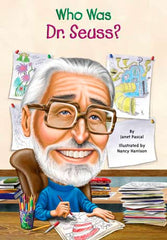 As always, I began writing my lesson by gathering my focus book and Story Grammar Marker® Mini-Posters. Since the children enjoyed our recent Rosa Parks read aloud Who was Rosa Parks? written by Yona Zeldis McDonough, this week I chose Who Was Dr. Seuss? written by Janet B. Pascal from the same series. I planned the lesson to coincide with Read Across America Day on March 2, which is Dr. Seuss’ birthday. The lexile measure of this book is 820L. The following lesson suggestions were designed for grades 3 and 4. Lessons may be modified to meet your student’s needs. Many people ask how I go about creating lessons to use the SGM®. Really, it is the opposite thinking, as I always have asked myself: How can the SGM® be used to enhance the lessons I already do and target skills that I am trying to teach?...


February is Black History Month — Lesson 3
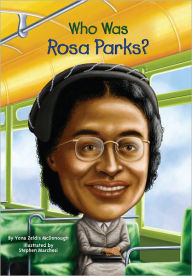 Having just read the biography Who Was Rosa Parks? written by Yona Zeldis McDonough, I gathered five of my favorite SGM Mini-Posters and sat down to create some lessons based upon this wonderful book for elementary school students. The blending of both narrative and expository text structures in this book makes it especially valuable to teach and reinforce the differences in text structures. It would make a wonderful informative read aloud as well as for use with individual student for reports and sharing. The Lexile measure is 700. The author includes two timelines, one showing Rosa Park’s life and the other corresponding to world events of the same years. This is especially helpful to relate to the setting of the biography...


Setting Activity—The Little House
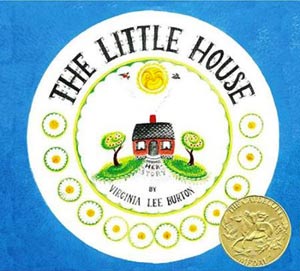 The Little House by Virginia Lee Burton was first published in 1942 but remains a favorite of many. It tells the story of a Little House — from the house’s perspective — that is located in the country, is lived in, and surrounded by beauty.
As the Little House sees the distant lights of the city, she wonders what it would be like to live in the city, and as time goes on, she finds the city growing until she is surrounded by it and no one lives in her anymore...


SGM Setting Activity with Younger Students
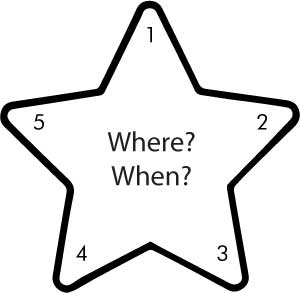 As we know, the Story Grammar Marker®’s design reflects the research connecting language and literacy. The icons represent the components of narrative discourse, an underpinning of literacy. Teaching the SGM® icons and their meanings will provide students with a scaffold to organize their thoughts in a meaningful way to communicate orally and in writing. Continuing with our setting ideas, today we offer one to reinforce the Star icon which represents the Setting, the where and when a story takes place. For those of you new to using SGM®, the Star was chosen as the icon for the Setting because sailors...


Reading Lessons and Blogs About the Winter Season
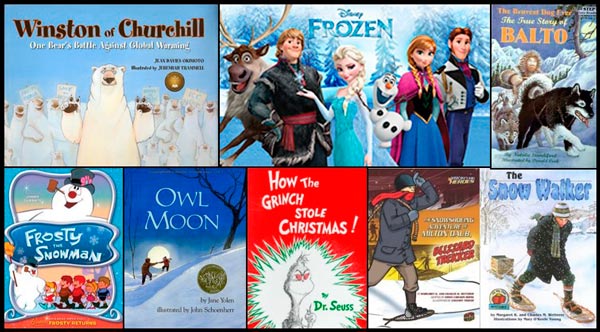 We recently posted a blog using the SGM® Setting Map with the four seasons:
With the official first day of the winter season right around the corner, check out some of these blogs and lessons that you may want to use with your students!


Winter’s Coming! Narrative/Expository Setting Lesson

Read several poems or books of your choice about the four seasons to the children. After reading, hold a brief discussion with the students about what they like about a particular season.
Have the children break into four groups. Using chart paper, label one for each season next to the setting icon. Ask the groups to rotate from one “season” to another and brainstorm all the words that the particular season makes them think of. Have one student be the recorder for each group and have each group use a different color maker...


Compare and Contrast Characters
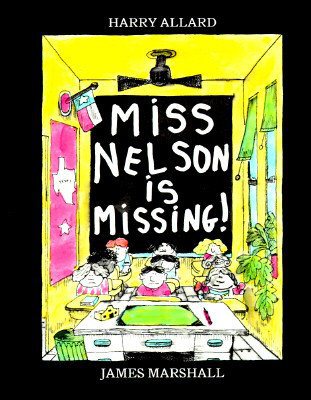 Miss Nelson Is Missing, written by Harry Allard and illustrated by James Marshall, is one of my favorites for comparing characters. It is a book that may be used at a variety of levels. Read the story for enjoyment. After, discuss the “two” characters, Miss Nelson and Miss Swamp.
Fill out individual character maps for each character or fill out one map for both characters as shown below which was done with a third grade class. Have children talk about the map(s) with one another.


Part 3: “Hilda Must Be Dancing” and “Giraffes Can’t Dance” — Compare/Contrast (cont.)
 Give each child a completed map identical to the one on your white board and on the reverse side have ready a map with just a blank template for drawing.
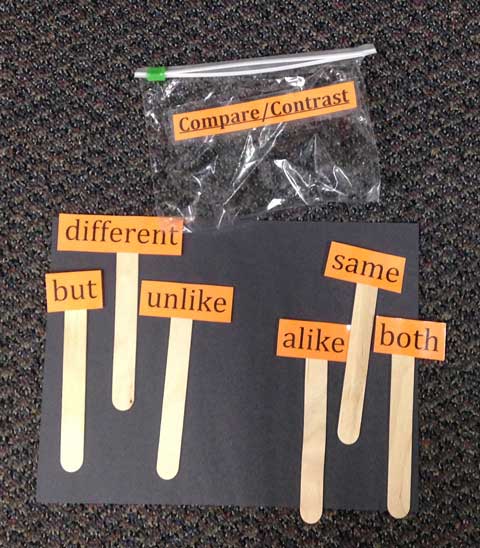
Ask the children to look at the side with the text and review the compare/contrast items they came up with in the previous lesson. Make, and have ready, several baggies containing the compare/contrast words presented yesterday and ask students to place them in front of them, as shown.


Part 2: “Hilda Must Be Dancing” and “Giraffes Can’t Dance” — Compare and Contrast
 Review the two stories with the children using the narrative icons/map and present the Compare/Contrast Map on a white board (or chart paper, depending on your situation). I set it all up ahead of time.
Begin by explaining the map to the children. Then, suggest that we start thinking of ways the two stories are the same/different using the SGM retelling icons. Start with the Character icon. Ask the children how Hilda and Gerald are the same/different...


“Hilda Must Be Dancing” and “Giraffes Can’t Dance” — Narrative Retellings
 These lessons would occur over a period of several days. I usually begin with Hilda Must Be Dancing, but it doesn’t matter which story you choose to work on first.
Read the story to the children. Present a map to the children of a complete episode with the icons going down the center. You may use either chart paper or use the magnets on a white board, as shown.
After reading one of the stories, map it out, icon by icon, engaging the children in the process. After reading one of the stories, map it out, icon by icon, engaging the children in the process. Keep the chart up and model retelling the story using your SGM® Teacher Marker…


Early Elementary Idea to Reinforce Character, Feelings, List and Sequence
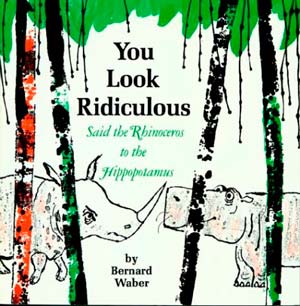 Children’s book author and Illustrator, Bernard Waber created many books for children including the Lyle the Crocodile series and Ira Sleeps Over. Another book, You Look Ridiculous Said the Rhinoceros to the Hippopotamus, is an old favorite that lends itself very well to introducing/reinforcing the SGM®/Braidy® List Map.
In this story, the hippopotamus is told by a series of other jungle animals that she looks ridiculous. Each animal then tells the hippopotamus that she needs features that he/she possess (examples include the leopard telling the hippo she needs spots and the giraffe telling the hippo she needs a long neck)...


A Trip Down Memory Lane: Feelings and Character Description Using a Classic Golden Book
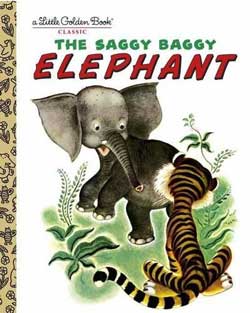 The Saggy Baggy Elephant, written by K. and V. Jackson, was first published in 1947 as part of many tales in the Little Golden Book series. I was recently reminded of this story when my neighbor’s grandson brought it to me to share. First published in 1942, Little Golden Books were created as an affordable choice of books that appealed to children. The books originally sold for 25 cents (www.randomhousekids.com/
goldenbooks) each. These books are still readily available to children, and, as of 2002, over 2 billion Little Golden Books were in print.
The following is The Saggy Baggy Elephant outlined as a basic complete episode...


Expository “My Research” Cut–and-Fold Booklet
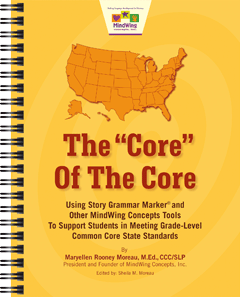 The “Core” of The Core manual contains many hands-on materials for student use. One of my favorites is the Expository “My Research” Cut–and-Fold Booklet. I have used this in many settings and grade levels, including centers and with intervention groups. Instructions are included in the manual.
Sea Turtles by Gail Gibbons is one book that works very well with this activity since it includes all expository text structures. As an added resource, Maryellen recently did a section of a webinar on the topic of sea turtles that you might be interested in viewing. (Click here to view Sea Turtles expository analysis excerpt.)...


Writing: Expository/Informational Descriptive Map to Paragraphs
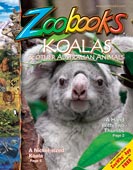 Today, we will look at some writing samples using the topic of Koalas and ideas to scaffold the process from using the Character Descriptive Map to paragraphs. As stated previously, any book/resource that you use may be adapted to these activities.
We used several resources including:
We followed the same procedure as in the Armadillo and Cheetah lessons: reading short segments, making a list of facts, and placing each fact in the correct category (physical appearance, habitat, food and eating, young, special characteristics)...


Teaching SGM® Components — continued 2
 Back by popular demand: Use this new story to review the SGM components in a group or to sharpen student awareness of narrative structure.
- Read the story below to the child. (download printed version).
- Review the SGM® components on the SGM® Teacher Marker.
- Have the students draw or stamp the icons above the correct SGM® component. Note that the story is a complete episode, the first paragraph having the character, setting, initiating event, feeling and plan stated; the second paragraph containing all the planned attempts to carry out the plan; and the last paragraph having the direct consequence (tie-up) and resolution (feeling about how the story ended). We have found it helpful to go paragraph by paragraph. (See completed version)
- Using the Teacher Marker, model retelling the story to the children.
- After the activity is completed, have the student(s) work with a partner, Turn and Talk, and use his/her SGM® Student Marker to retell the story.


Teaching SGM® Components
 Are you looking for a story to review the SGM® components in a group or to sharpen student awareness of narrative structure?
1. Read the story below to the child (download printed version).
2. Review the SGM® components on your Teacher Marker.
3. Have the students draw or stamp the icons above the correct SGM component.
4. Have the students draw or stamp the icons above the correct SGM® component (see completed version)
5. After the activity is completed, have the student work with a partner, Turn and Talk, and use his/her SGM® Student Marker to retell the story...


Exploring Expository Continued: Descriptive Map Activity
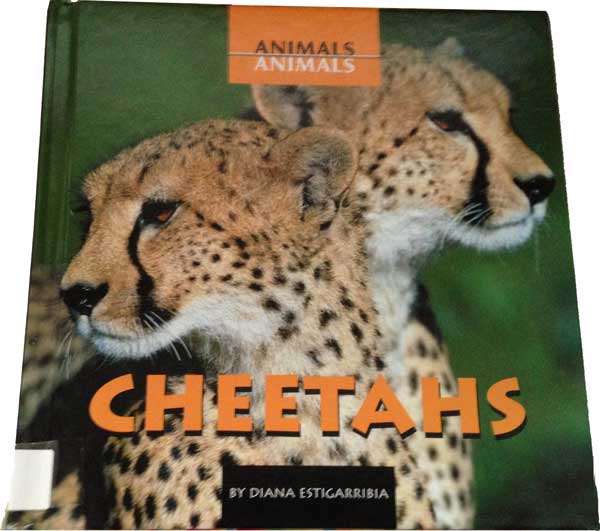
We are often asked which books/materials to use with the SGM® and ThemeMaker® maps. Although there are many suggestions given in our manuals, the answer is: any selection that you are using will work! The strength of the SGM/ThemeMaker lies in the fact that it is a flexible approach that adds needed scaffolding to make text, whether narrative or expository, assessable to all students.
A recent post, Exploring Expository Text Using the SGM Descriptive Map (August 12, 2015), focused on transitioning from the Narrative Character Map to the Expository Character Descriptive Map.
It’s an Armadillo! written by Bianca Lavies was the text chosen for that first post. Today, we present an extension of this Descriptive Map activity with the topic of cheetahs, which we have presented whole group in grades 2-4. You may modify to meet your needs...


Foldables and Stamps Activity
 Creating foldables is one way to make reinforcing the SGM icons an enjoyable experience. Using a flipbook and our Icon STAMPede Stamp Activity Set is a versatile way to engage students. There are a variety of flip book ideas online which may be adapted to this activity and the stamps make it easy for students themselves to create their own booklets during centers.
The Basic Flip Book/STAMPede activity…
- Decide which icons you would like students to work on… this will vary by what you want to reinforce with your students
- Place as many sheets of paper as needed, one on top of the other...


Exploring Expository Texts Using the SGM Descriptive Map
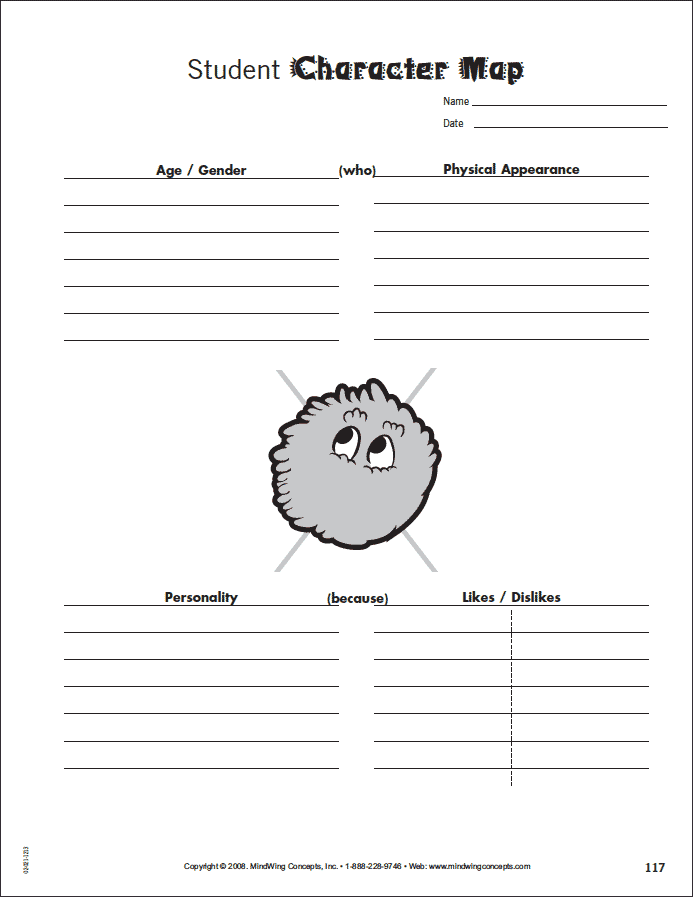
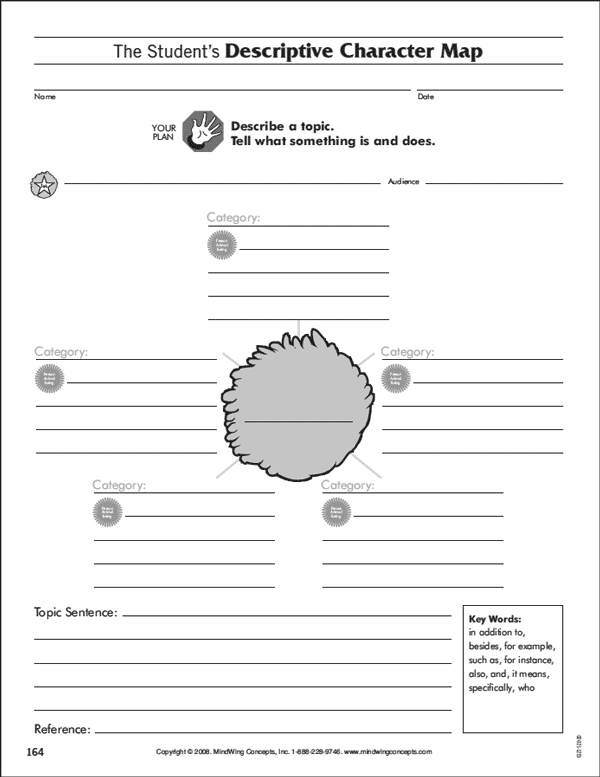 Several lessons on characters and settings have been presented in past blog entries. Increasingly, children are asked to take informational selections and summarize what they have learned. There is a great need to help students find ways to organize and express expository texts. We have found it helpful to take the time to transition from the use of the Character Map—that the children are already familiar with—to the Descriptive Expository Map. Begin by showing your students the Character Map and the Descriptive Map.
Braidy’s Bag
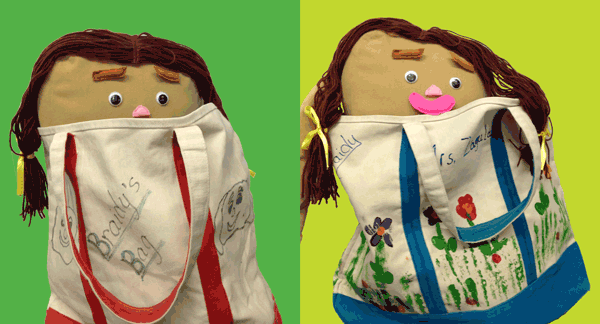 Do you travel from classroom to classroom teaching Braidy the StoryBraid lessons? Canvas tote bags are very helpful! You can fit Braidy and all the accessories plus the books/activities needed for your lessons in the bag. One teacher used large plastic envelopes and put the book and activity for each class in separate envelopes. Everything fits nicely into the bag. Shown are two of my “Braidy Bags.” The bag shown at the right was made by my kindergarten students. Each child had a part in the “creation” of this bag using his/her thumbprint and paint as part of the design...

Character and Setting, Fun Activities
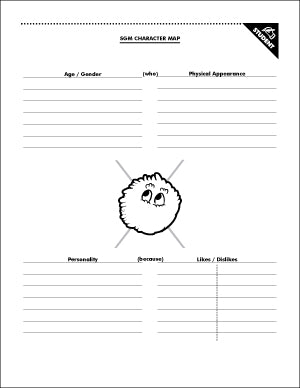

Are you looking for a quick lesson to reinforce the SGM or Braidy Character Map? Have students each fill out a character map or work with a partner to fill out the map in an interview format: • How old are you? • What best describes how you look? • What are you like as a person? • Are you friendly? • Are you curious? • What do you like (to eat, to do, etc.)? • What don’t you like?...
Enjoy Using the Story Grammar Marker® Materials For Traditional and Graphical Stories
Our winter theme is expanding in literature as well as in real life here in New England. From blogs containing twelve episodes of Frozen to Owl Moon to the recent Blizzards of 2015, we have chosen two versions of the same story reflecting a winter theme.

The Snow Walker
(On My Own History)
By Margaret K. Wetterer and Charles M. Wetterer (Authors)
Mary O'Keefe Young (Illustrator)
Carolrhoda Books (Lerner)
Minneapolis, MN: 1996
ISBN: 978-0876149591

The Snowshoeing Adventure of Milton Daub, Blizzard Trekker
(History's Kid Heroes)
By Margaret K. Wetterer and Charles M. Wetterer (Authors)
Emma Carlson Berne (Adapter), Zachary Trover (Illustrator)
Graphic Universe (Lerner)
Minneapolis, MN: 2010
ISBN: 978-0761361947