

Search
170 results found for "Sean Sweeney"


Tech Tuesday: Chapter Books and Stickwriting, a Complementary Visual Strategy
 Using chapter books, which provide richer and yet more difficult narratives older students must tackle, has been a focus of the MindWing Blog this school year. In several of my posts, I have discussed tech-related avenues to getting the context of chapter books your students may be reading in class (to serve as topics for narrative intervention activities with SGM®), as well as apps that can visually represent the Critical Thinking Triangle®, a great support to review the narrative gist of chapters within a book. In this post, we are going to take a look at a great chapter book to use along with SGM®, The SOS File by Betsy Byars, Betsy Duffy, and Laurie Myers, along with a strategy that aligns with narrative intervention, Stickwriting, or representing narrative elements through quick sketches...


Tech Tuesday: Tech Tie-Ins to Autism Awareness Month
For this month’s Technology Tuesday, I wanted to spin off of the previous post and mention new resources relating to the themes of a few of these posts from the MindWing archives. So here is some commentary and additional tools relating to four of our back catalog of posts relating to language learning in the population of students with autism spectrum and related disorders. Aligning SGM® with The Zones of Regulation, and Tech-Tie-Ins! This post described the key connections between Story Grammar Marker® and Leah Kuypers’ wonderful and extremely useful Zones of Regulation curriculum. In the post, resources such as Pic Collage were mentioned for making visuals elaborating on emotional vocabulary associate with each Zone, and YouTube Kids for locating video scenes to assist students in identifying Zones and “Triggers” (essentially Kick-Offs) in others...


Tech Tuesday: Using Emoji in Narrative Analysis

A friend’s Emoji creation in the SnapChat app.
In selecting topics for Technology Tuesday, I find it helpful to “piggy back” on my own clinical work, of course, but also on topics that have recently appeared on this blog. Recently, Sheila Moreau wrote in a MindWing blog about the power of emoji for understanding narrative events, identifying emotions, and expressing empathy, particularly in relation to Facebook’s recent incorporation of a range of reactions available to use in response to others’ posts. While emoji are a narrative phenomenon changing our (and teens’) reaction to social media (note that they have always been present in the “much-cooler” Snapchat), there are also ways to use them as visual tools out of the context of social media, a place where clinicians may not “want to go” with students...


Opening a New Chapter: Strategies for getting the context of curriculum chapter books!
 As the MindWing blog has been focusing on using chapter books for older students, in conjunction with narrative and expository development tools, this Tech Tuesday post will also! In this post, we’ll take a look at technology resources that facilitate your access to chapter books. These strategies will enable you to use chapter books more easily as contexts when developing students’ sense of story and informational text structures with MindWing’s Story Grammar Marker® and Expository maps. Naturally, we’d be conducting educationally relevant interventions even if we selected our own texts for lessons. For example, take this Common Core Standard for 5th Grade Reading...


When the characters are a whole classroom of students: Some high and low-tech tips!
 For this first Technology Tuesday of 2016, we’ll be sharing some strategies for delivering whole-class instruction, some involving electronics and others...simpler technology such as giant sheets of paper! We recently completed a series of lessons in a classroom on a consultation basis. From our perspective, strategies such as SGM® benefit not only our students with specific needs, but also the entire classroom and teacher. For this series, we were seeking to integrate social-cognitive, language and executive function strategies for a particular student, but met an initial “Kick-Off.” Our principal raised concerns about devoting the time needed for 6 lessons and the potential impact of taking that time away from ELA instruction. This was easy to respond to, because:
- Narrative language has many social impacts as well as listening and reading comprehension, and, of course, involves the story-based language of responding orally in class and producing writing...


Aligning SGM® with The Zones of Regulation, and Tech-Tie-Ins!
 This month we will discuss the acclaimed Zones of Regulation® program and dovetailing with narrative instruction through Story Grammar Marker®. All students must develop self-regulation skills for living and learning, an area defined by author Leah Kuypers as “the best state of alertness of both the body and emotions for the specific situation” (Kuypers, 2011). However, students with language-learning disorders and autism spectrum and related disorders can exhibit more significant struggles with managing their mind and body given their communication needs, as well as other factors such as sensory processing...


Adobe Voice gives “Voice” to Narrative or Expository Language
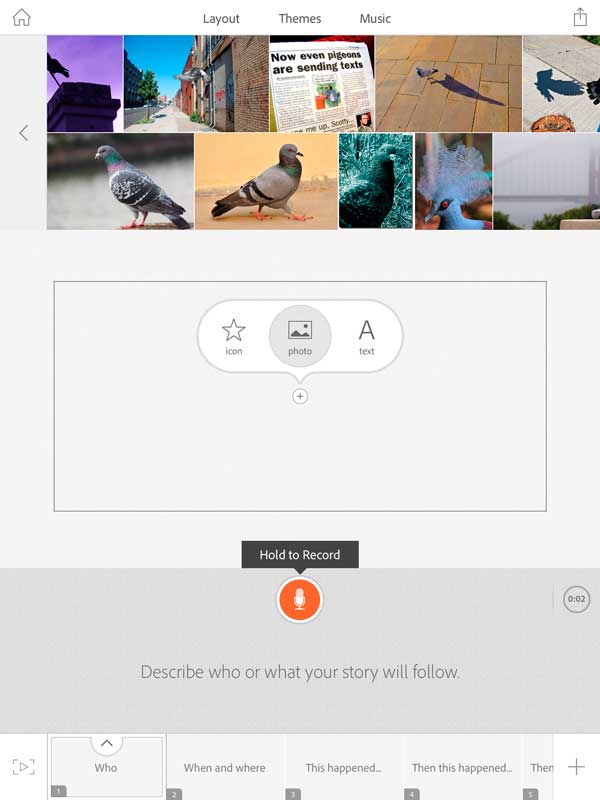 It’s Technology Tuesday, and this month we will cover a simple, free tool to practice combining visuals and oral narration to produce an engaging video! A main goal of using MindWing’s Story Grammar Marker® and ThemeMaker® tools is to provide structure for oral discourse. Narrative or expository maps provide a “plan” for the elements of discourse, along with key words to help students connect their thoughts when formulating a story or explanation. In this way, a culminating activity of using any language map can involve asking students to “connect the dots” in formulating a complete story or using expository language. Adobe Voice, a free, easy-to-use app, provides a fast and motivating way to do this!...
Using Kerpoof for Digital Storytelling and Narrative Development Part 2
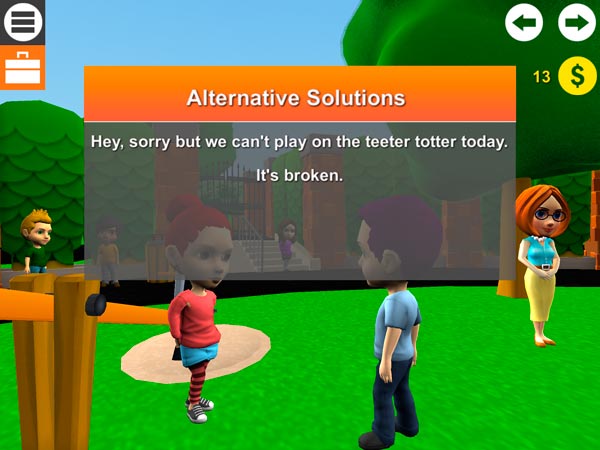
Over the years I have come to believe that Story Grammar Marker has taught me as much about narrative development as it has taught my students about telling stories! Initially, I used to use the full SGM and teach Complete Episodes, regardless of my students' level of development. Although they gained a good sense of the icons and could identify story elements, the ties between elements were missing--what to do about my third graders who still peppered their stories with "and then" after "and then?" Using the “A Day in the Park” booklet with students really helped me understand my students' narrative levels and the cohesive ties that mark each stage. From there, my use of the SGM became much more thoughtful, differentiated and holistic-- addressing sentence structure as well as overall story structure.
Back to those 3rd graders- although we had done “A Day in the Park” in Grade 2, they definitely needed a review, specifically one that would boost them from an Action Sequence to a more complex story that included more mature cohesive ties: a Reaction Sequence. Their teacher welcomed me into the classroom for a group project...


Use Google Search Stories tool to develop narrative and expository language
Every year during the Superbowl, a few commercials stick out from the sea of repetitive beer, snack food, and summer blockbuster ads. This past year, one of the best was Google’s Parisian Love ad, which told the story of an American’s romance with a French woman in a simple and brilliant way, as an unseen character “Googled” various search terms that reflected events in his life. A follow-up ad about a girl switching schools, which I never saw aired, would be even more relatable for kids and is definitely a great model of a complete episode.
These commercials were so popular that Google created a wonderful tool that allows users to make their own Search Stories. Simply pick your search terms and the type of search you want shown in your movie (e.g. web, image, product, map, etc), select the music and upload to a YouTube account (if you have Gmail, you already have a YouTube account)...
Character Social Thinking
While running groups for students with social-cognitive deficits over the past years, I have frequently observed their difficulties with the story grammar element of character. Often, these students start telling a story in the vein of “Mike and I went to…” as the rest of the group looks at them blankly, thinking, “Who is Mike??” Or at least the facilitators are wondering who Mike is, since the other students may not even be thinking of the “expected behavior” that they should listen, let alone tease out character details!
Character, Social Thinking, and the Avatar
 Many of us think of the word “avatar” and have trouble separating the idea from that blockbuster movie about tall blue people-ish beings on an alien planet. In Avatar, the main character is disabled and uses an avatar to assume the form of an alien being and interact with their civilization. So we’re not that far off; an avatar is a visual representation of someone within an environment, usually a computerized one. Because there are many simple websites that create avatars, they actually have a place in our interventions as well! Using avatar makers with kids motivates them to visually represent and describe themselves to peers...
Engaging Activities for Character Traits and Social Inference
In social group interventions, we would like our students to develop a sense of each other by building “friend files” (Michelle Garcia Winner). Some of the activities I have mentioned in previous posts can be of assistance in engaging students to share straightforward information about themselves. However, we also want to build students’ abilities to make inferences about each other—for example, wearing an Apple T-shirt might indicate that the person likes computers, and could be a good conversation starter...


Setting Can be the Key to a Story
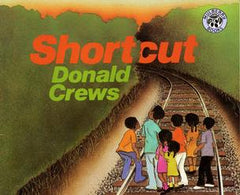
My previous post discussed the narrative element of setting and the tendency of students on the autism spectrum (or with other language disorders) to leave out details about setting, causing listener confusion. One way to explore the importance of setting is to plan interventions using books with an integral setting- where the setting is key to the motivations of the characters and understanding of the plot.
One of my favorites in this vein is Donald Crews’ Shortcut, the story of a group of cousins who find themselves in unexpected danger after taking a shortcut home. Not only does the book serve as an excellent example of building suspense around a small moment in a personal narrative (great for students working on memoir), it also lends itself to being mapped both on a Setting Map and a literal, visual map to develop storytelling skills...
Let the Setting Speak for Itself
Blabberize, a web app that allows you to add a talking “mouth” and recording for any picture, is a great tool for developing all kinds of organization and oral language skills. I recently used it with students in conjunction with a Setting Map from It’s All About the Story to develop descriptive skills and the concept of setting. After having students pick a favorite setting, we located a visually supportive image of the place using Google Images. Students completed a Setting Map and described key elements such as Location, Function/Use, Areas/Parts, etc. We then downloaded the image, logged in to Blabberize, added a mouth and integrated the notes on the Setting Map into an oral description. The example you can view here is one created with an individual student; you can always keep it shorter if you have a group!...


Interactive, Visual Resources to Complement Feelings Instruction (Internal Responses)
 As stated so well in It’s All About The Story, Book I of MindWing’s Autism Collection, “Tuning into one’s own Feelings as well as the Feelings of Others is extremely problematic to children with autism. The book provides visual flip charts, discussion prompts and an introduction to the Six Universal Feelings (happy, sad, mad, scared, surprised and disgusted), as well as ways to move beyond those Universal categories to more advanced feelings vocabulary—all of these resources give SLPs a great place to start...
Happy Valentine’s Day!
Valentine’s Day approaches! It’s a great time to target students’ understanding of feelings as described in It’s All About The Story, Book I of Mindwing’s Autism Collection! The Feelings icon is, of course, a heart, a common symbol of this holiday. You can use this book’s introduction to the Six Universal Feelings (happy, sad, mad, scared, surprised and disgusted), or Feelings in general as emphasized in the Story Grammar Marker program, along with the two resources presented in the screencast below, to develop students’ narrative language and perspective taking abilities. The screencast describes how to use a resource that almost everyone has access to- Microsoft PowerPoint- and also provides an overview of an interactive poetry generator. Having students make a Valentine for a special person in their lives can be an important way to show they are “thinking about” others and use some great language skills...


Dinosaurs, Narrative, and Flexible Thinking
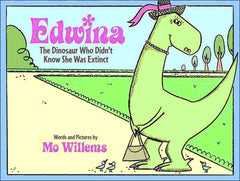
I always love finding resources that serve as a context for addressing many speech and language-related skills. The wonderful book Edwina — The Dinosaur Who Didn’t Know She was Extinct by Mo Willems is one of those resources; it can be used to target narrative and expository formulation, as well as social thinking skills in several areas.
To begin with, Edwina is a story that will engage and delight children from early to late elementary ages, beginning with its title and the name of the main character, Reginald Von Hoobie-Doobie. Reginald has a problem...


Story Grammar and the Classroom Curriculum: The Five Senses
Over the years I have developed a special interest in collecting and using picture books that are tangential to the classroom curriculum. It’s wonderful to find books that contain touches of our content areas but aren’t “in your face” about it! These books can engage students in a story (and thus help them develop narrative language) while also providing a context to access abstract curriculum areas.
Although many schools cover this topic at different times of year, Spring is a great time for a science unit on the five senses. For younger students, this is a basic overview on how we experience the world though hearing, sight, smell, taste and touch. For older students, these simpler concepts can serve as an entry point to the more difficult intricacies of how the sensory system works. Additionally, May is Better Hearing and Speech Month in the USA and May Month in Canada, so what better time to talk about the sense of hearing, and maybe sync with some lessons about hearing and speech?...


Sharing our own Stories & Social Problem Solving using Story Grammar Marker®
Over the summer I had the kind of “Kickoff” that we all hope to avoid in the course of our ho-hum days. It was a 95-degree school day and I was leaving one setting to go to my private practice and run a social skill group. As I opened my passenger side door to put my bag in the car, an oppressive blast of heat enveloped me. I decided stupidly that it would be a good idea to lean over and start the car so the A/C could have, you know, a millisecond to cool down the car as I walked around toward the driver side. Of course when I got there the door had locked automatically, as it had on the other side. Ugh...
Fantastic Narrative Intervention with Toontastic
 Recently in the Mindwing Blog I featured the Story Patch iPad app, which allows students to create stories according to provided structures or from scratch, resulting in a text and picture-based booklet.
I wanted to follow up that post with a different digital storytelling app that provides an easy means to create and publish dynamic animated stories with spoken audio and music! The app I speak of is Toontastic (an absolute BARGAIN at $1.99), whose creators at Launchpad toys have sought to bridge the gap created when students who primarily express themselves through play are suddenly expected to write stories (i.e. that gap we call “First Grade”). Toontastic uses the iPad’s multitouch interface...


A Wonderful Wordless Video Series for Narrative Development
SLPs and teachers working in language intervention often turn to wordless picture books as a fun context to develop storytelling skills. Series such as Mercer Mayer’s “A Boy, a Dog, and a Frog...” tell stories through pictures and ask readers to tease out the story, inferring the important details and relying on characters’ facial expressions to glean important clues. Similarly popular are David Wiesner’s Tuesday and Sector 7, which depict narrative through fantastical illustrations, and Alexandra Day’s “Carl” series, in which a dog goes to great, un-dog-like lengths to care for his charge, a little girl named Madeleine. I have long been a fan of using such visual narrative materials with students, not only to develop storytelling skills...
Simple Comics for More Advanced Language
At the elementary school level, we all can attest to seeing students who, narratively, get stuck at what we might call the “andthenandthenandthen” stage. The official name for this stage is the Action Sequence, and it is comprised of Characters, Settings, and a series of Actions with little variation in conjunction use. These students benefit from structures and contexts to move them into using to more complex story elements and cohesive ties such as when, because, and so. Mindwing’s narrative maps, particularly the Reactive Sequence and Abbreviated Episode Maps can provide that structure: (*Maps can be found in the Story Grammar Marker® Teachers’ Manual and the Talk to Write, Write to Learn™ Teachers’ Manual )...
This Vacation Week, Take the Kids to a New Setting: Disneyland!
 In the Northeast at least, February means school vacation week, and who doesn’t like Disney? Disney’s parks are based on its countless characters and, of course, narratives, and the company recently released a FREE iPad app that allows children to explore Disneyland. Disneyland Explorer (iPad only) provides a touch-navigable visual environment allowing kids to visit a huge variety of themed settings (Adventureland, Critter Country, Fantasyland, Frontierland, Tomorrowland, and so on, and that’s only in Disneyland proper) as they tap to reveal additional photos, videos and music. The app is naturally designed to lure tourists to Disney’s parks, but in the process it provides a primer in the element of Setting, providing a context for clinicians to develop students ability to describe locations, themes, and even genres...
Using SGM and Thememaker for Project-Based Learning
Project-Based Learning (PBL) is a recent trend in educational design, and involves presenting students with real-world contextual tasks that relate to curriculum areas. PBL is a great approach for Speech-Language Pathologists and Special Educators to employ as our students benefit from having their learning relate to personally relevant and functional content. To learn more about PBL, watch this great video from Common Craft. One tool that has been integrated as a kind of PBL is the “Webquest,” a set of web pages that outline a task and provide web-based resources for its completion. Webquests are not new, and teachers have been developing them for some time. There is a particular Webquest that I wanted to share with you in this post, particularly because it is one you could use in classroom, small group, or even individual language therapy while integrating Story Grammar Marker® and Thememaker® tools in the process...
You (as a character) Are A Social Detective!

On the heels of Autism Awareness Month, I wanted to highlight a product that provides a terrific complement to use of the Story Grammar Marker® for treatment of social learning and narrative deficits for students with autism spectrum and related disorders. You Are a Social Detective is a CD-ROM product (compatible with Mac and Windows systems) created by Michelle Garcia Winner of Social Thinking® in conjunction with the folks at Social Skill Builders. The program is based on the popular comic of the same name, which provides a visual primer on basic social thinking concepts such as expected and unexpected behaviors and their effects on others, “thinking with the eyes,” and making “smart vs. wacky” guesses. Many children on the autism spectrum require explicit and consistent teaching of these concepts and coaching in their application across the school day...
Taking Paper Out of the Story
The arrival of the iPad has presented us with all kinds of opportunities to boost the engagement factor for our students. In many cases, students will be more engaged in what we would consider “paper and pencil” tasks when we “app-itize” them utilizing some of the tools available as free or cheap apps. For example, in recent posts on my blog SpeechTechie, I discussed how the iBooks app could be used to excite students about printed materials and also present PDF files that are often provided with published intervention materials (you don’t need to read those posts to understand this one, but they provide some related information)...
A Gift to a Character!

‘Tis the season! No matter what one’s religious beliefs are, the holiday season involves giving, and this is a context that is ripe for critical thinking, description, perspective-taking, and social scripts. It can be quite difficult to engineer learning situations in which children are giving each other actual gifts, what with the need for stores, money, and the fine-motor aspects of wrapping. However, technology can cut through some of that sticky tape for us and provide us with a virtual-gift-giving activity!
I first learned of the Gift Wrap App (FREE for iPad)...


Exploring Action Sequences with Apps and the Common Core Standards
 The narrative skill of describing and sequencing actions that can occur within a particular place is so relevant to the classroom curriculum, most recently redefined with the arrival of the Common Core State Standards. The classroom itself is a place where children learn, play, read, write, draw, listen, laugh, and sometimes argue, not necessarily in that order! Nearly every academic topic could be framed as an action sequence, while many children requiring narrative language intervention can get stuck at the previous level of naming, the descriptive sequence. We can help scaffold them to the next level using Story Grammar Marker® and strategies from MindWing’s recent book, The “Core” of the Core: Using Story Grammar Marker® and Other MindWing Concepts Tools To Support Students in Meeting Grade-Level Common Core State Standards...
“The Incredible Flexible You” and Braidy Make a Great Pair!
April is Autism Awareness Month, and here on the blog we wanted to showcase a connection between Mindwing’s tools and interventions that target social learning for children with autism!
Over the past year since its release, I have found The Incredible Flexible You™ Curriculum Set (Volume 1) by Ryan Hendrix, Kari Zweber Palmer, Nancy Tarshis and Michelle Garcia Winner and published via Social Thinking® to be an invaluable teaching tool! Targeted to early learners—preschool through 2nd grade, but adaptable to older students requiring basic social learning lessons—the curriculum set aims to develop key social cognitive concepts through stories and play. The five storybooks that come with Volume 1 set the context for many lessons and play activities as the main characters, Evan, Ellie, Jessie and Molly, learn and demonstrate the core concepts in the set...


Wrapping Up Better Hearing and Speech Month with Sound and “Stories”
 In May, as we celebrate Better Hearing and Speech Month, we look to promote awareness of communication in all its forms, which includes storytelling and discourse. As we close out the month, we wanted to suggest an app that promotes dialogue about communication (and provides a source of expository text), aligns with MindWing’s Thememaker Maps, and suggests a twist on using the SGM® iPad App!
The San Francisco Exploratorium’s free Sound Uncovered app for iPad provides a wealth of information about hearing and sound...
Settings and the Five Senses

The book that my friends and I are reading in July for our Book Club is the best seller Valley of the Dolls by Jacqueline Susann. I am only a couple of chapters in, but the first few sentences in this book struck me, because this passage exemplifies the idea of authors’ ability to create “movies” in their readers’ minds.
"The temperature hit ninety degrees the day she arrived. New York was steaming — an angry concrete animal caught unawares in an unseasonable hot spell. But she didn't mind the heat or the littered midway called Times Square. She thought New York was the most exciting city in the world" (Susann, 1966). The author used many senses to describe the setting; how the heat felt, what she saw and heard and smelled. Susann also used figurative language and personification (“angry concrete animal”) to create a very vivid mental image of New York City...
Narrative is “Having a Moment” in Research Circles
Narrative seems to be “having a moment” in research circles, with a number of recent articles being published related to the why and how of developing storytelling skills. One of the most exciting pieces is “Classroom-Based Narrative and Vocabulary Instruction: Results of an Early-Stage, Nonrandomized Comparison Study,” (Gillam, Olszewski, Fargo & Gillam, 2014) detailing a study primarily conducted by Utah State University and published in Language, Speech and Hearing Services in Schools (and available to ASHA members in full text here).
This study com-pared the results of narrative and vocabulary instruction via a traditional versus an experimental approach in two first grade classrooms...
Getting the “Story” of a Situation
In working with SLPs, teachers, other professionals and graduate students around the myriad ways I find Story Grammar Marker® useful in intervention, I often emphasize how narrative is at the crux of language functioning and social cognition. This post will explore this idea with an eye toward the concept of situational awareness, an area we can look at as critical for many of our students with social learning challenges--an appropriate topic for May as it is Better Speech and Hearing Month!
In their article, Social Learning and Social Functioning: Social Thinking's Cascade of Social Functioning, Michelle Garcia Winner and Pamela Crooke describe how awareness of situations serves as the foundation of interactions. Social functioning can then be considered a "cascade" of additional skills such as self-awareness within a situation (and understanding of one's own possible role in the ongoing situation) and abstracting and interpreting the ongoing language and actions of others.
Technology Tuesday: Vocabulary, Summer Programming, and Story Grammar Marker®!
 Some years ago as an SLP in the elementary school setting, I was informed by a colleague of Isabel Beck’s revolutionary approach to targeting vocabulary. In the book Bringing Words to Life: Robust Vocabulary Development, co-written with Margaret McKeown and Linda Kucan, the authors describe a methodology for building vocabulary revolving around key principles...


Tool Tuesday: Gratitude is a Little Story (With Typable Lesson Material!)
I almost dislike writing about gratitude at Thanksgiving time, as it is a practice that is self-regulating all year round. It is well documented that regularly steering our thinking toward gratitude helps override our brain’s negativity bias and train ourselves to notice positive elements of life, with influence on our mood, and therefore our executive functioning. Recent discourse around gratitude has created the term “glimmers,” serving as the opposite of “triggers.” Glimmers are small observations that help calm our nervous systems....

Downloadable Lesson Material


Tool Tuesday: Summer Study Series Part 2— “Ideas on Scaffolding Play through Narratives”
This month we will look at a study using play contexts to build narrative language. It’s notable that since the publication of this 2020 study, “Believing in Make‐Believe: Efficacy of a Pretend Play Intervention for School‐Aged Children with High‐Functioning Autism Spectrum Disorder,” there have been some significant shifts in our field’s focus towards neurodiversity-affirming language and approaches. For example, we should avoid stigmatizing labels such as “high-functioning”...


Tool Tuesday: Need a quick assessment tool? Try the CUBED!
I have been serving an adjunct role at Boston University for 5 semesters providing supervision to graduate students in their first clinical experiences in the in-house clinic. One of the routines for the semester is to teach and use processes for obtaining baseline and post-treatment data. It was by equipping students in this manner that I discovered the availability of the CUBED, along with the previously mentioned SLAM Cards. The CUBED is a “family of screening and progress monitoring tools” that includes a huge package of graded story samples (levels K-8) with narrative language listening and reading materials and measures....


Tech Tuesday/Summer Study Series: Narrative Language and Social Emotional Programming
“Interjections” has always been my favorite Schoolhouse Rock song, and I am sure we have some we would like to utter about summer being (almost!) over. But it is always good to return to work with a sense of purpose, right? It has been fun writing this year’s Summer Study Series and I thought this last piece was particularly relevant to our roles in being part of a collaborative community in schools. Engaging minds and hearts: Social and emotional learning in English Language Arts (click for full free PDF article) is an honest, insightful look at SEL programming and has helpful suggestions for its integration in ELA classes. To me, though not explicitly stated here, it highlights the role of narrative language intervention and applications of Story Grammar Marker® and the Critical Thinking Triangle in helping our students unpack stories to learn from the higher level elements of feelings, plans and mental states. Though this article relates to such instruction in Canada, it is just as relevant to schools in the USA...


Tech Tuesday/Summer Study Series: The Moral of the Story is…
 As someone who loves themes and context, I was thrilled to find a particular study on assessment and intervention with FABLES to include as this entry in the 2022 Summer Study Series! This resource made me think back to last year’s discussion of using moral dilemmas in narrative language and social cognitive therapy activities. This post includes the advantage of having many adaptable materials to offer you! Specifically, we are talking about Philosophy for Adolescents: Using Fables to Support Critical Thinking and Advanced Language Skills (Nippold and Marr, 2022), an extensive article describing the authors’ work in assessing and intervening in language and critical thinking skills through fables...


Tech Tuesday/Summer Study Series: Narrative Meta-Analysis!
 With much of the USA wrapping up the 2021-22 school year, it’s time to embark on another summer study series. Naturally, each post will have a tech tie-in with a practical resource as well. First up, I was super excited to tell Maryellen and Sheila about a meta-analysis on narrative language interventions from October 2021 and have been eager to write about it here. A meta-analysis is considered among the highest levels of evidence and is a study of studies so to speak, applying criteria to include research on a topic and determining effect sizes of interventions. The study in question, Interventions Designed to Improve Narrative Language in School-Age Children: A Systematic Review With Meta-Analyses (Pico, Prahl, Biel, Peterson, Biel, Woods & Contesse) was published in ASHA’s Language, Speech and Hearing Services in Schools and is therefore available to all ASHA members, or ask your friendly SLP for a copy...


Tech Tuesday: Choose Your Own Prob-Narra-Ventures
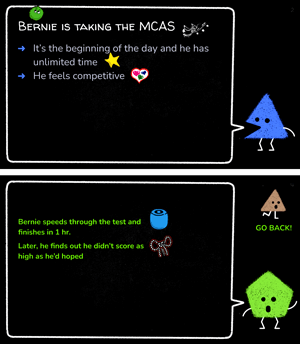 We’ve spoken in this space before (blog link) about the links between narrative language and problem solving that can be scaffolded through the use of Story Grammar Marker® and its relevant icons, particularly the digital kit. Moveable icons are very useful in guiding thinking and discussion when bringing students back to a relevant detail (or story element) that they may not have been considering. See also the work of Westby and Noel (2014) on the connections between story and problem solving. Recently I have been working with several students on test-taking skills and strategies, a process in which it is helpful to address the thought processes, self-talk, as well as social cognition and self-regulation that underlie this situation...


Tech Tuesday: Summer Study Series #4, Be Principled!
 In this, our last entry in 2021’s Summer Study Series, we’ll review a recent article from leaders in the field who present a very helpful set of 10 principles for narrative intervention that will guide you in this new school year. Additionally, several strategies for leveraging technology will also be described, as we can consider tech a useful tool, however your service delivery evolves in this unfortunately still-weird educational situation. Spencer and Peterson (2020) detail narrative intervention principles and practice tips in their ASHA-accessible article “Narrative Intervention: Principles to Practice.” I love the trend of incorporating the ever-readable web “listicle” as an element of our research literature...


Tech Tuesday: Summer Study Series #3, Consider the Functional
In July’s entry for 2021’s Summer Study Series, we’ll be looking at the critical overlap between narrative and expository language and our students’ access to the academic curriculum. Meaux and Norris (2018) tackle this topic in a tutorial for Language, Speech and Hearing Services in Schools entitled “Curriculum-Based Language Interventions: What, Who, Why, Where, and How?” I have always appreciated ASHA publications’ “tutorial” articles as I have found them to provide the most functional and practical information to be useful in interventions. The other “functional” consideration with this article is that including a focus on curriculum has always seemed natural to me. There is so much inherent language in school curricula and, from a linguistic perspective, this potential gap in comprehension and expression is why students receive our services...


Tech Tuesday: More Jamboard and Mixed Methodologies
 Over the past months, I have been working with students online and finding new ways to use this Jamboard tool...the sky’s the limit! One effective way is to integrate methodologies like Story Grammar Marker® into the use of Jamboard as a visual support to elicit and scaffold language. Audiobooks from Epic! Audiobooks for Kids can be chosen for short segments or chapters that make for a zone-appropriate lesson blending auditory comprehension with narrative language intervention. You may not be willing to go to bathroom-humor-lengths to engage your students at this point, but I am! So, since they asked for Captain Underpants (Dav Pilkey), I checked it out, and delivered!...


Tech Tuesday: “Jam” with SGM®
 Get ready to Jam! This past year, Google introduced the interactive and collaborative tool Jamboard, which could not have come at a better time given the pandemic and our need to engage students via distance learning. Jamboard allows for quick and easy co-creation of visuals in a shared space via addition of images, sketches, text boxes and post-its. Therefore, it is a great venue for making interactive scenes, brainstorming, and generating language on graphic organizers. To access Jamboard, follow the steps you would to get started with any Google tool: go to the “waffle” in the upper right corner of a Google space such as Gmail or Drive, and select Jamboard...


Tech Tuesday: “Woke” Stories, Using the Critical Thinking Triangle® with Current Events
 This fall I have had the great pleasure of working with a student who is very engaged in teletherapy and has a special interest in topics related to social justice. His “woke” nature has served him in keeping informed about the pandemic and stories related to the Black Lives Matter movement, but like many of our students, he can miss important elements of these narrative events. ASHA outlines that incorporating Client Values into treatment is an important component of Evidence-Based Practice (EBP). This is defined as “the unique set of personal and cultural circumstances, values, priorities, and expectations identified by your client and their caregivers.” This aspect, as well as the importance of engaging textual contexts and targeting narrative for students with ASD, led me to conduct a weekly current events activity through teletherapy for his sessions...


Tech Tuesday: Summer Study Series on an RCT of Narrative Intervention for Adolescents
 We look at an exciting piece of research from last summer (July/August 2019), Improving storytelling and vocabulary in secondary school students with language disorder: a randomized controlled trial* (full article available at link). In this article, Joffe, Rixton and Hulme describe a randomized controlled trial (RCT) involving both narrative and vocabulary intervention for secondary students in the UK. It is notable because RCTs in language intervention are relatively rare, and considered a high level of evidence. ASHA, on a scale of evidence quality, rates “well designed randomized controlled trials” as level 1b, 2nd on a 6-point scale of evidence; these are research studies in which intervention groups are compared to a control group in which no intervention was provided. Additionally, interventions for adolescents with persistent language problems are less researched, so this study is an important one!...


Tech Tuesday: ASHA Convention Wrap-up, Part 1
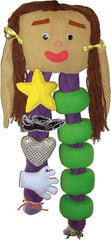 This year brought those of the speech-language pathologist ilk to Orlando, which I have come to think of as the land of simulated Character and Setting. Inside the more sedate but still stimulating conference halls, MindWing’s tools were shared by a number of presenters including me! In Developing Expressive Language In Preschoolers: Strategies to Increase Utterance Length and Complexity (Mentis, Howland, Graham), the authors described their integration of Braidy the StoryBraid® into a language and literacy program for preschoolers, providing graduate student clinicians with wonderful experience in targeting language in the context of stories and play. The presenters recommended a number of books used within their program, moving from emphasis on simple to more complex story grammar and microstructure...